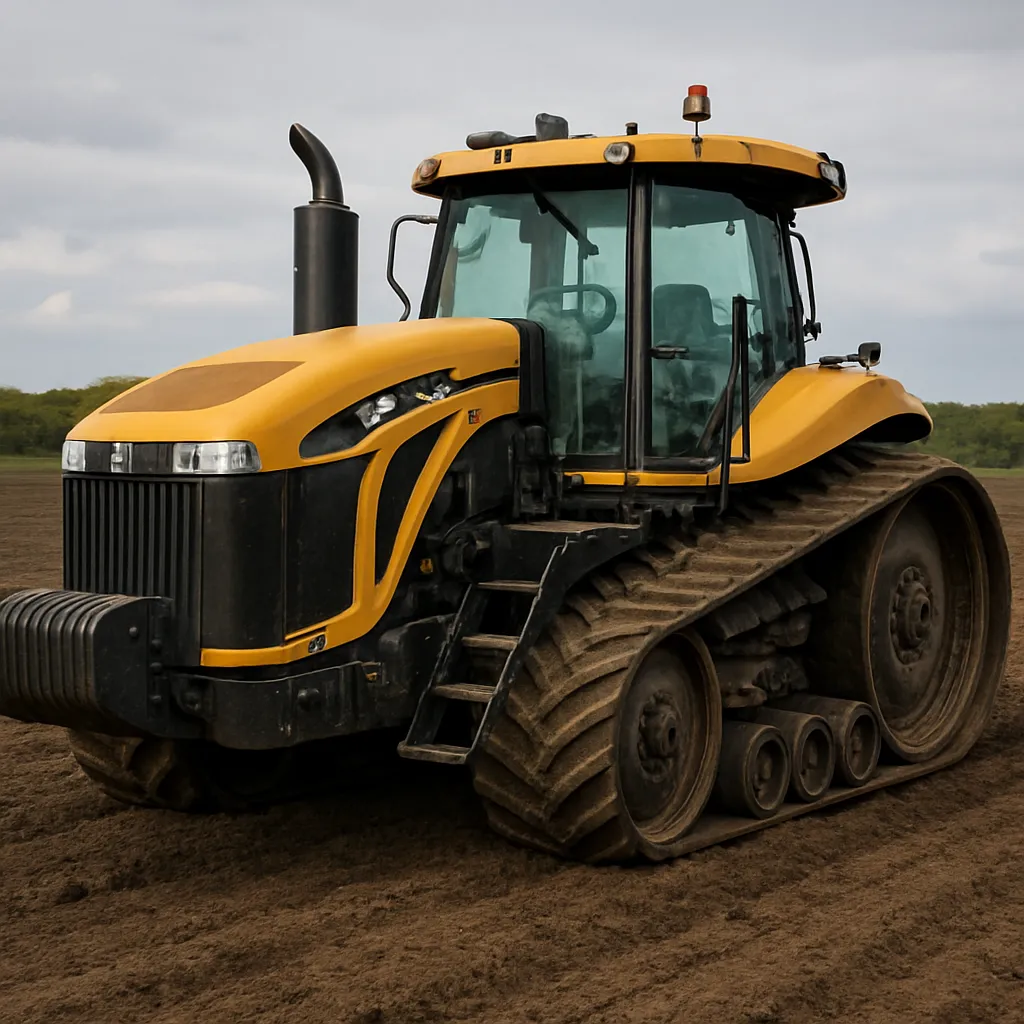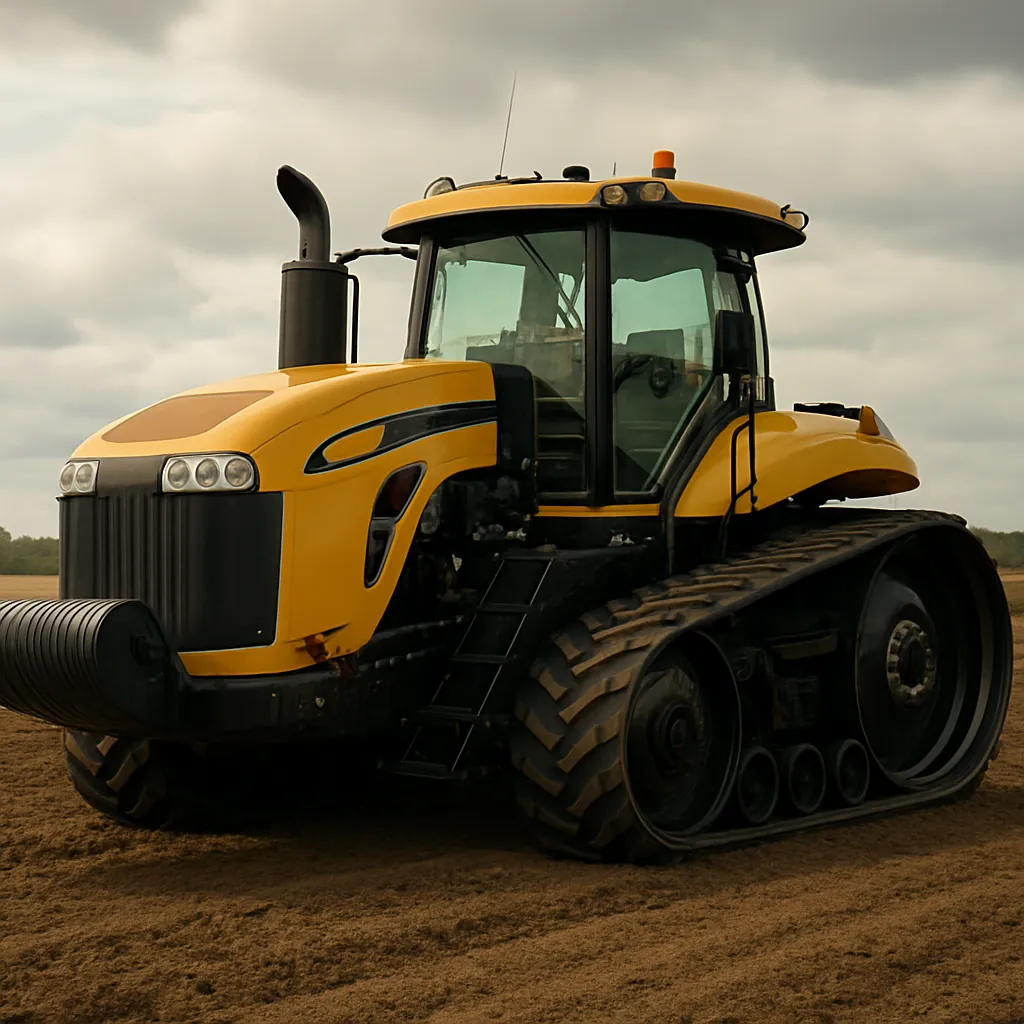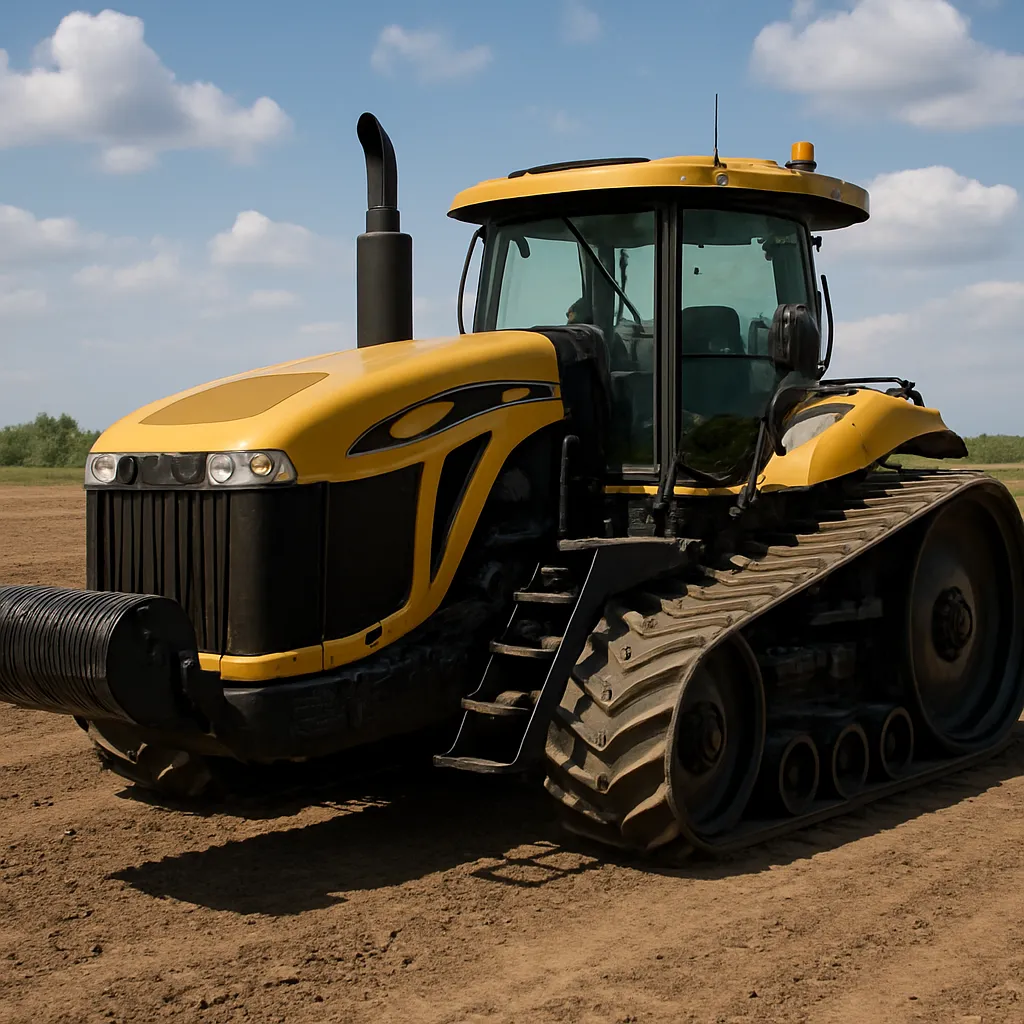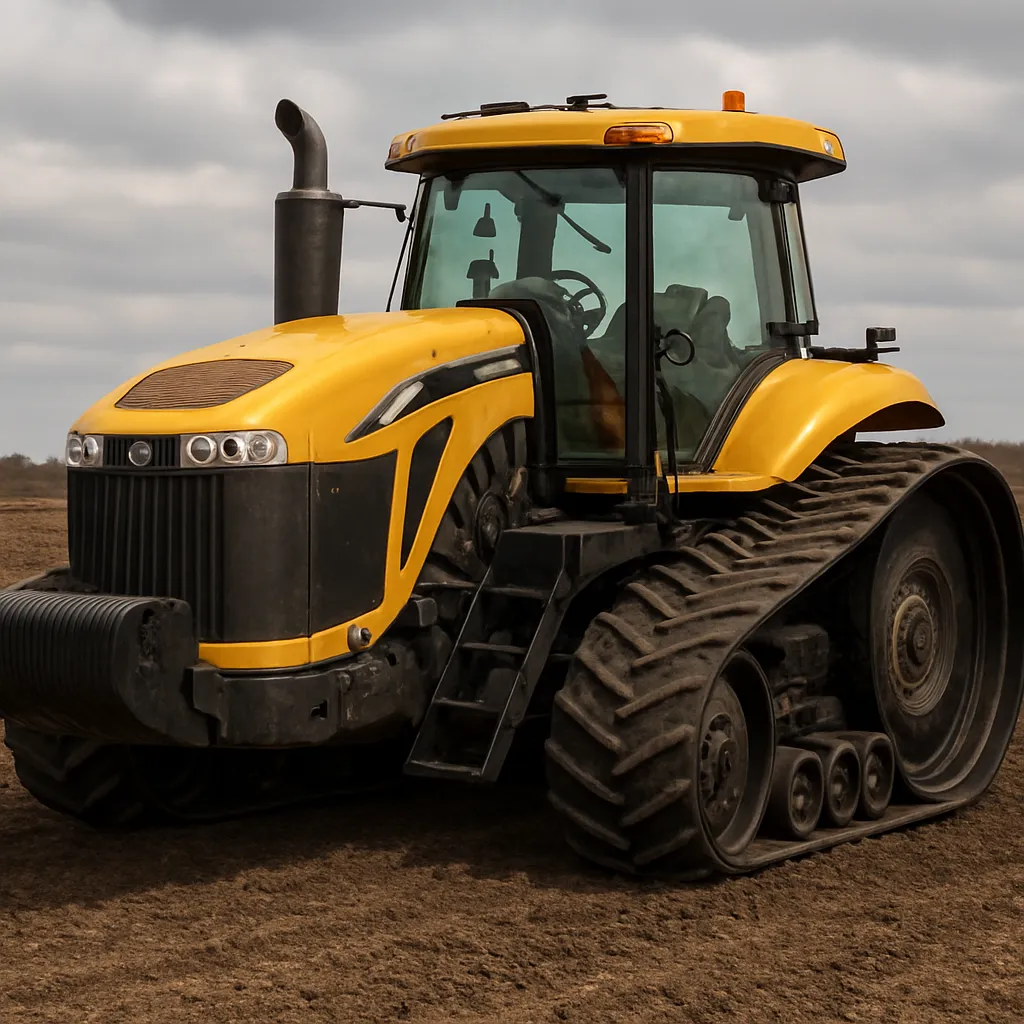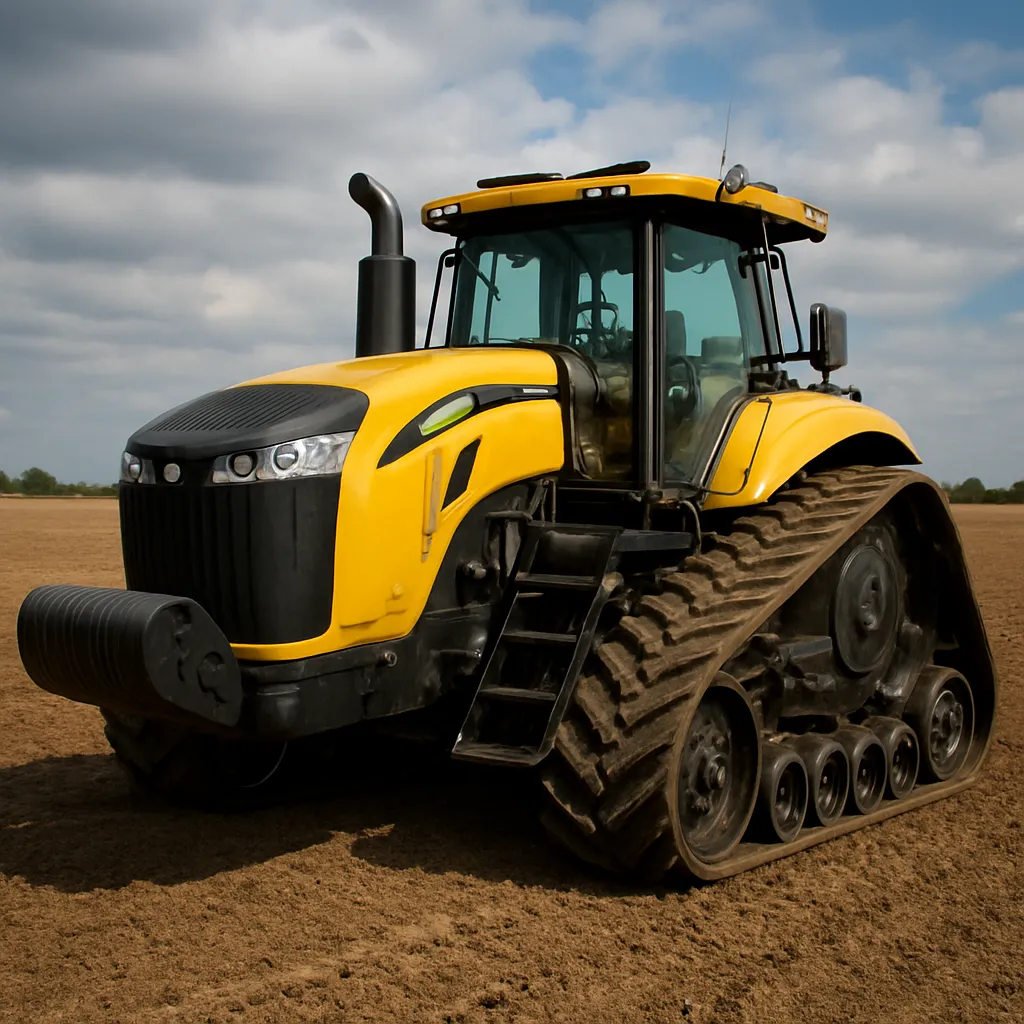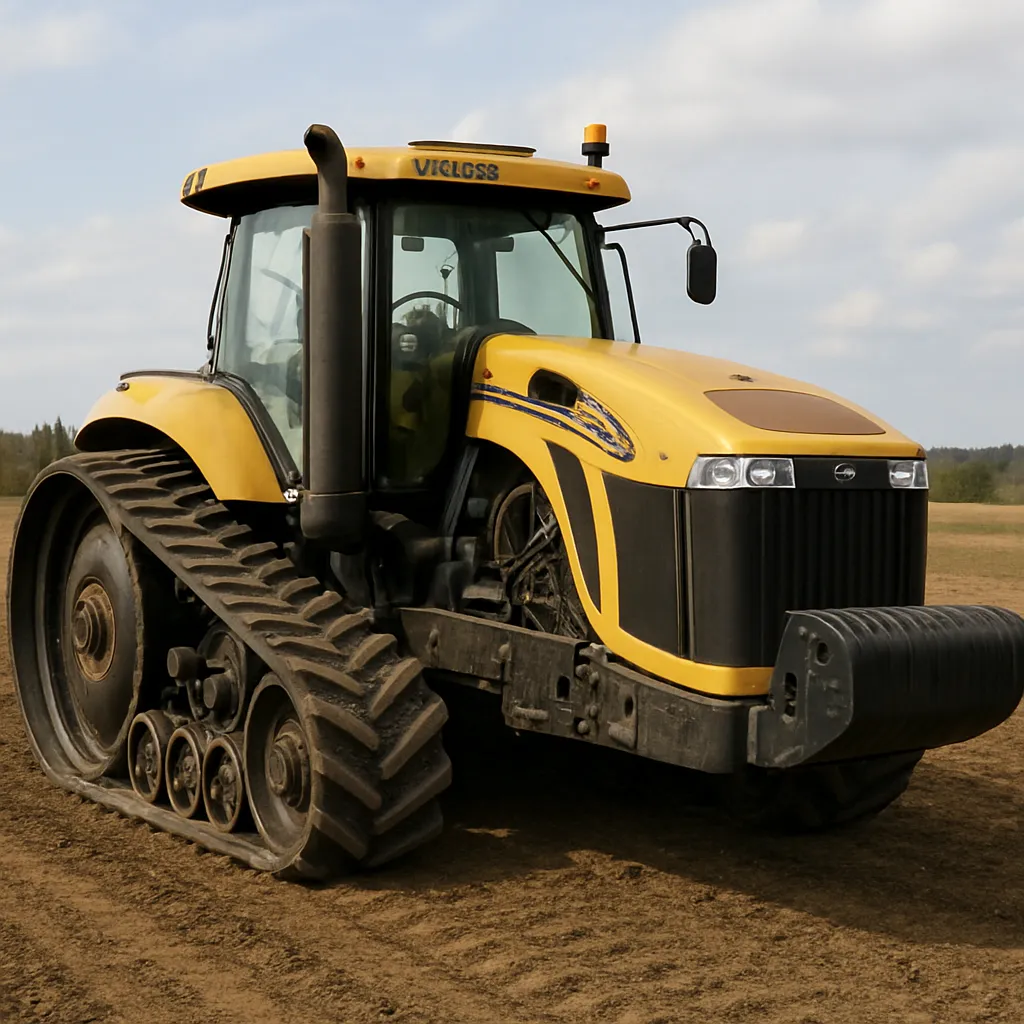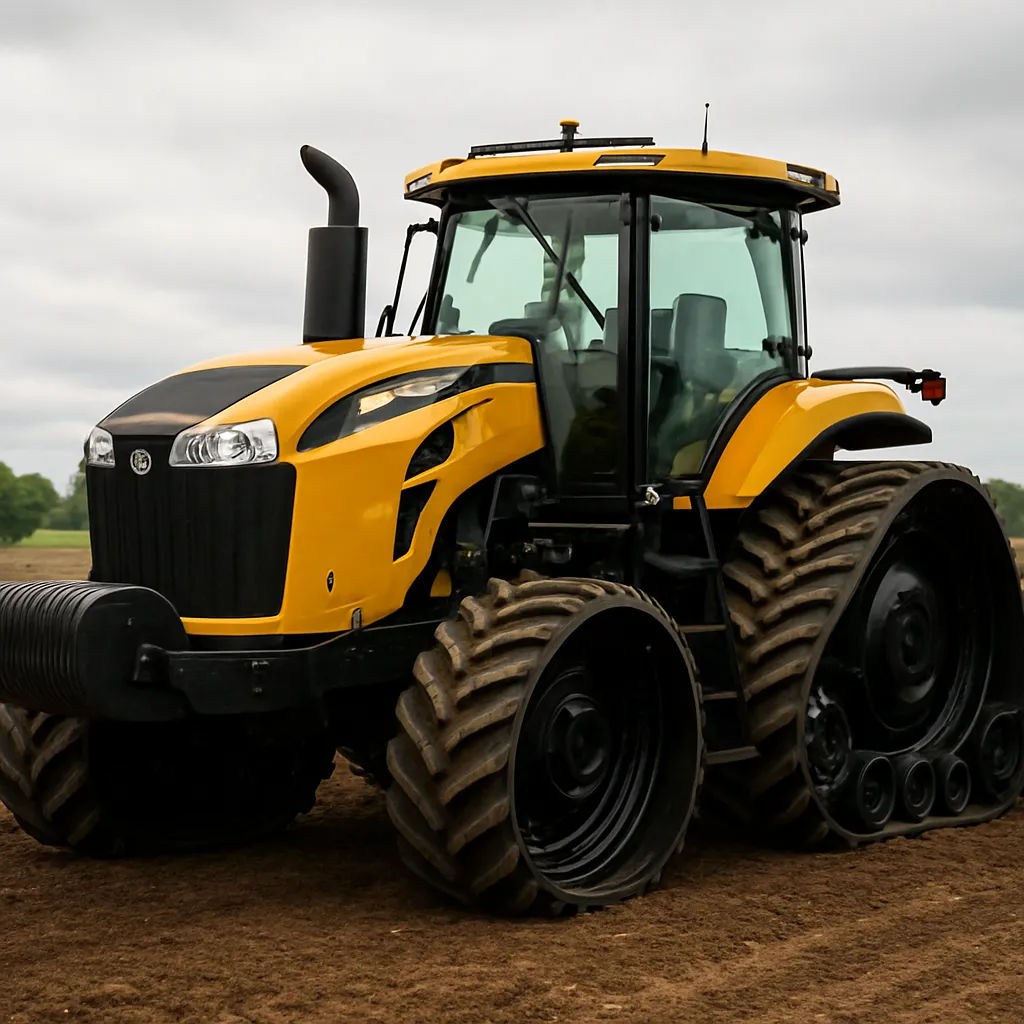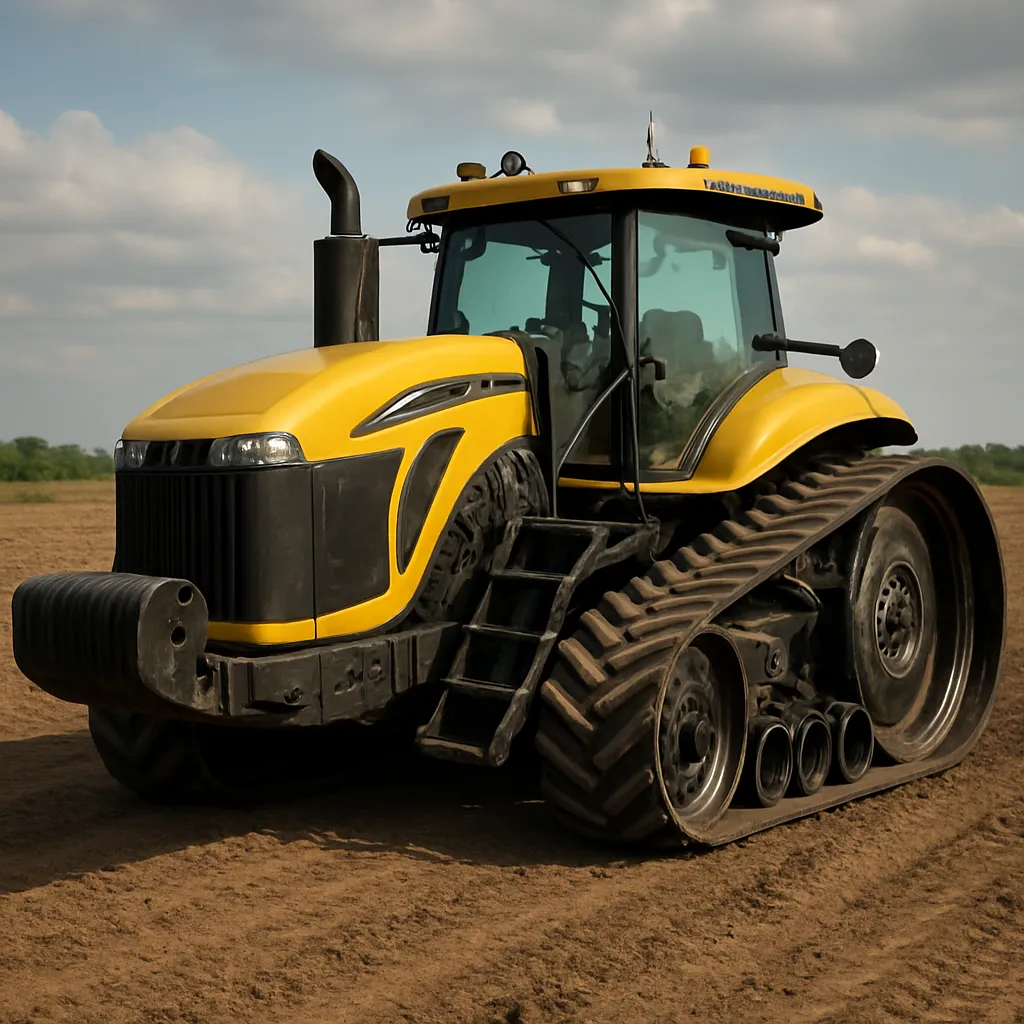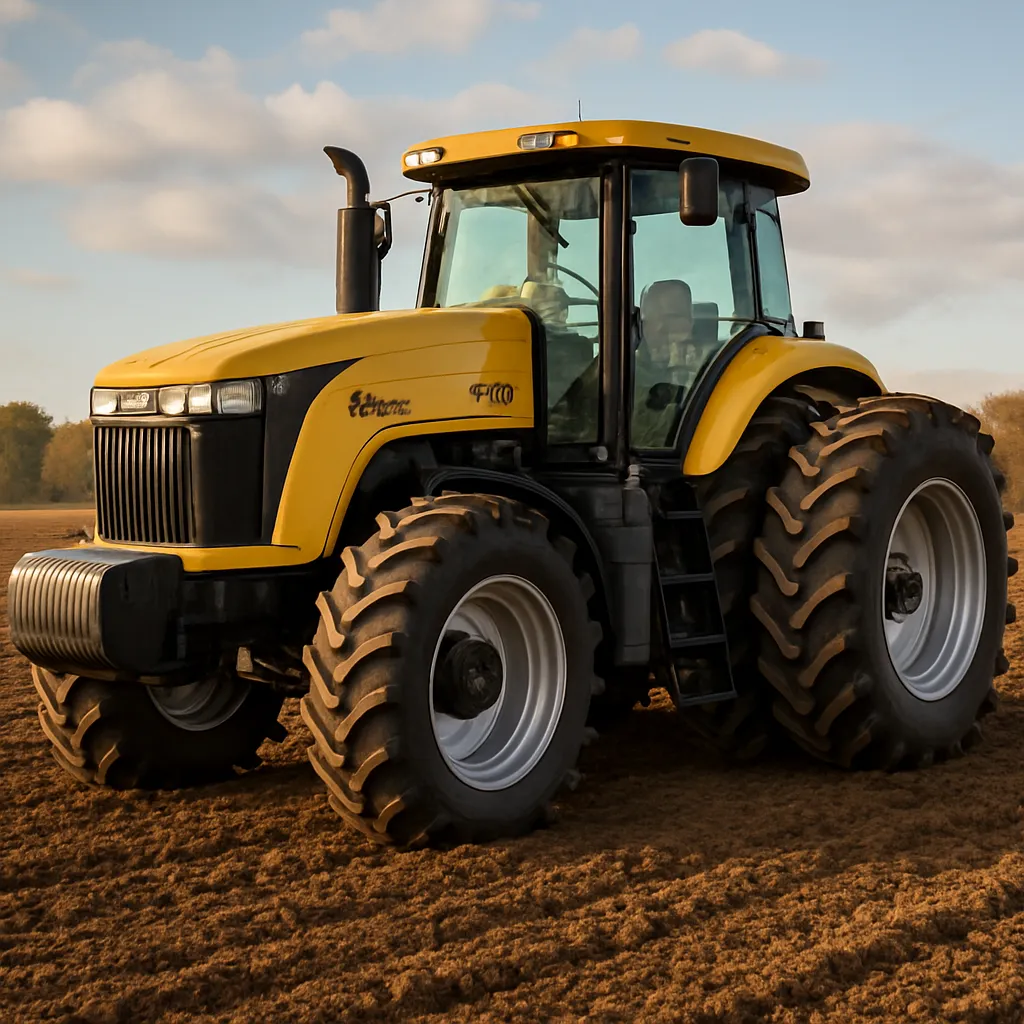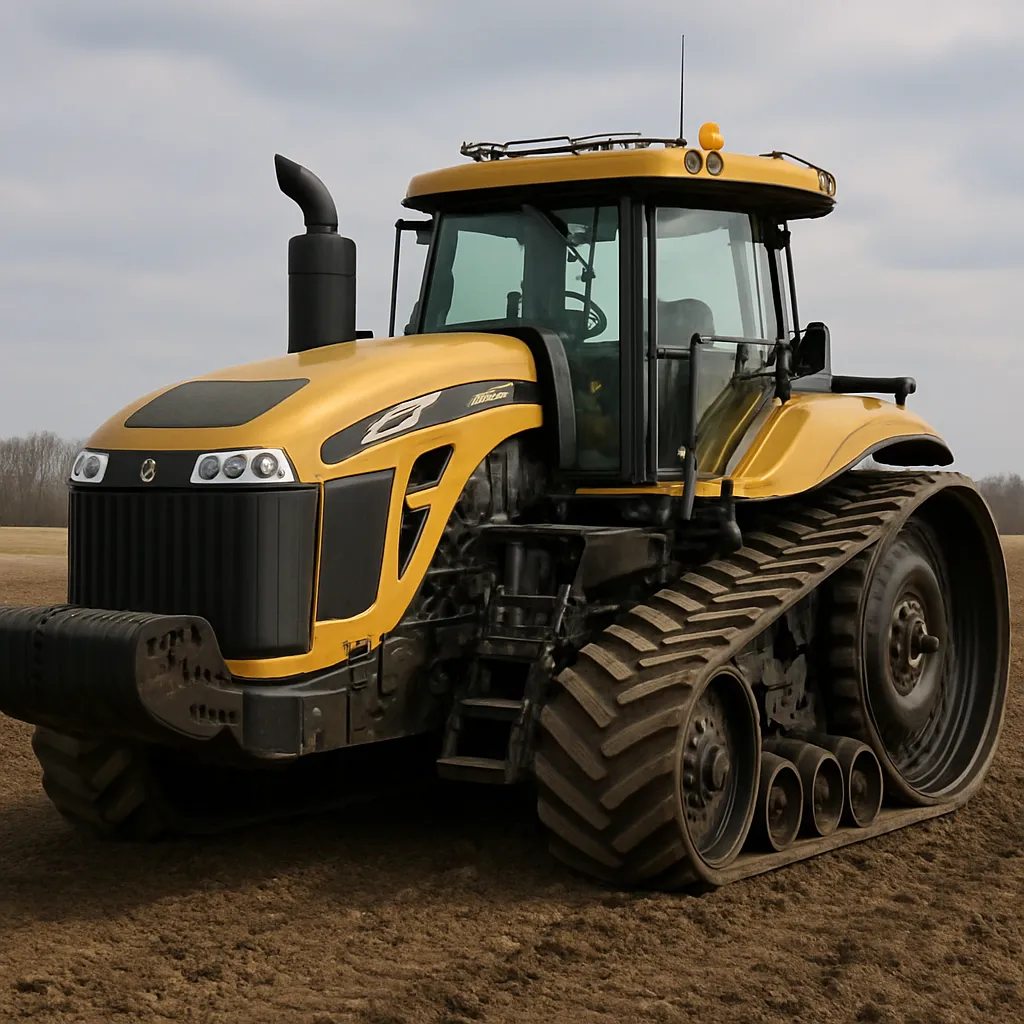
The Challenger MT875E is a heavy-duty, tracked agricultural tractor designed for high-horsepower fieldwork where traction, flotation, and fuel-efficient long hours are required. Built to handle demanding tillage, seeding, and haulage tasks, the MT875E combines robust mechanical systems with operator-focused features to deliver consistent performance on large farms, contractors’ operations, and specialized tasks such as deep ripping or land reclamation. Below you will find an in-depth look at the machine’s design philosophy, typical technical characteristics, real-world applications, operation and maintenance considerations, and economic and environmental implications.
Design and technical characteristics
The MT875E is a member of Challenger’s MT series of tracked tractors, engineered to provide superior ground contact and traction relative to wheeled machines. It was developed with the goals of minimizing soil compaction, maximizing usable traction, and increasing field productivity through improved power transfer to the ground.
Engine and powertrain
Typical configurations for an MT875E include high-displacement diesel engines tuned to deliver sustained power for heavy draft operations. The tractor is built to provide a high continuous drawbar pull and stable power delivery across a wide rpm range, supporting implements that require steady torque. Key attributes of the powertrain include:
- High-output diesel engine optimized for torque and long-duty cycles
- Heavy-duty transmission options (powershift or electronically controlled systems depending on the specification)
- Robust cooling and air-cleaning systems to maintain performance in dusty or hot environments
Tracks and undercarriage
The defining feature of the MT875E is its continuous rubber track system. Compared with conventional tires, tracks increase contact area, spreading machine weight across a wider surface to reduce pressure and improve flotation on soft soils. This yields several operational advantages:
- Traction: Tracks provide superior grip for pulling large tillage implements or heavy planters.
- Flotation: Reduced ground pressure minimizes rutting and compaction, helping maintain soil structure.
- Better stability on slopes or uneven fields, allowing safer transport of large implements.
Hydraulics, hitch and PTO
The MT875E typically features robust hydraulic flow rates and multiple hydraulic circuits to support large implements, seeders, and air drills. Hitch capacity and hydraulic versatility are designed to meet the needs of large-acreage operations:
- High-flow hydraulic pumps to operate modern planters and foldable tillage equipment
- Heavy-duty 3-point hitch and drawbar options compatible with large-scale implements
- PTO configurations tailored to implement needs (where applicable), although many primary applications rely on drawbar-mounted or hydraulic-driven implements
Primary applications and typical uses
The Challenger MT875E is optimized for high-acreage, high-intensity tasks where consistent power application and ground preservation are priorities. Common uses include:
Tillage and primary cultivation
Large plows, cultivators, and disk harrows demand both sustained torque and traction. The MT875E’s track system allows attachments to be pulled through heavy soils without excessive wheel slip, helping operators maintain consistent working depth and implement speed for uniform soil preparation.
Seeding and planting operations
When pulling large planters or air seeders, the MT875E helps preserve seedbed integrity by reducing draft variability and wheel-induced compaction. This is especially valuable when planting follows primary tillage or when working in marginal moisture conditions.
Subsoiling and deep ripping
Deep subsoilers and rippers require substantial drawbar pull. The MT875E’s design places the engine power to the ground efficiently, making it suitable for breaking hardpans and improving deep soil structure, which can boost root development and long-term crop performance.
Heavy transport and specialty tasks
On large farms or in contracting operations, MT875E tractors can be used for heavy in-field transport, moving large grain carts, trailers, and implements between fields. Specialized tasks such as land reclamation, drainage installation, and industrial-site preparation can also benefit from the machine’s traction and flotation.
Performance, fuel use and statistical considerations
Performance metrics for the MT875E depend on year, configuration, and optional equipment. The following figures are representative ranges and should be considered indicative rather than definitive; actual numbers vary by model year and customer-selected options.
- Engine power: Typically in the upper-horsepower range suitable for large implements. Many MT-series tractors in this class are rated from mid- to high-hundred horsepower brackets (commonly several hundred horsepower).
- Operating weight: The weight of a tracked tractor like the MT875E can be substantial due to the undercarriage—often several tons—helping provide traction but also influencing transport logistics.
- Fuel capacity and consumption: Large tracked tractors have sizable fuel tanks to support long field days. Fuel consumption depends heavily on load and working conditions; average specific fuel consumption for modern diesel agricultural engines often falls within expected ranges that balance power and economy.
- Hydraulic flow: High-flow hydraulics suitable for powering large contemporary implements and auxiliary systems.
Key performance considerations in practice:
- Field efficiency gains from reduced slippage can translate to lower fuel consumption per hectare compared with comparable wheeled tractors under the same conditions.
- Soil compaction reductions translate to better long-term soil health, which can increase yields over time and decrease the need for corrective deep tillage.
- Transport between fields can be slower and may require wheeled support equipment or transport trailers due to track wear and road restrictions; operators must plan logistics accordingly.
Operator environment and controls
Manufacturers of the MT series put emphasis on operator comfort and ease of use, recognizing that these tractors often work very long shifts during planting and harvest campaigns. Notable features often include:
- Comfortable, ergonomically designed cab with good visibility to the implement and surrounding field
- Intuitive control layout with electronic systems to manage traction control, engine mapping, and implement settings
- Climate control and suspension seats to reduce operator fatigue during extended operations
- Instrumentation and telematics options to monitor fuel use, engine hours, GPS-based guidance compatibility, and performance data
Maintenance, reliability and lifecycle
Long-term ownership of a heavy tracked tractor like the MT875E hinges on disciplined maintenance and timely service. The fundamentals include regular engine servicing, undercarriage inspections, and hydraulic system checks.
Undercarriage care
The track system is a critical maintenance area. Regular checks for track tension, wear on rubber elements, wear on drive lugs and idlers, and proper alignment help extend the life of the undercarriage. Replacement cycles depend on usage intensity and field conditions—abrasive soils and frequent road travel accelerate wear.
Engine and drivetrain
Routine oil and filter changes, cooling system checks, and fuel system maintenance sustain performance. Given the high-power duty cycles, attention to the transmission and differential systems is essential; scheduled inspections and use of manufacturer-recommended lubricants preserve longevity.
Serviceability
Good access to service points (filters, drains, inspection panels) reduces downtime. Many producers of tractors in this category design for field-serviceability so that common tasks can be completed without returning the machine to a shop.
Economic and environmental considerations
Investing in an MT875E must be weighed against operational needs, acreage, and the cost-benefit over time. The tractor’s strengths—traction, reduced compaction, and high productivity—offer economic advantages in certain scenarios.
- Cost per acre: While acquisition cost and maintenance for a tracked, high-horsepower tractor can be higher than for smaller wheeled machines, productivity gains in the field (faster speeds, fewer passes) can lower effective cost per acre on suitable operations.
- Soil health and yield: Reduced compaction can improve long-term yield potential, making the MT875E attractive where soil structure is a limiting factor.
- Fuel efficiency: Better traction efficiency often reduces slip and wasted fuel, improving fuel economy per unit of work.
- Resale and lifecycle: Well-maintained machines can retain value due to their utility in high-acreage farms and contracting fleets.
Environmental points:
- Reduced compaction helps maintain soil carbon storage and improves aeration and water infiltration.
- Diesel engine emissions are an important consideration: modern engines incorporate emission controls, but operators should follow emissions regulations and consider cleaner technologies as they become available.
Attachments, versatility and customization
The MT875E is often deployed with a wide spectrum of implements and attachments. Its strength is the ability to pull large, wide implements and to power hydraulic systems for complex tools. Typical categories of compatible equipment include:
- Large moldboard plows, disk harrows and cultivators
- High-capacity seeders and air drills
- Subsoilers and deep rootzone amelioration tools
- Large grain carts, trailers and transport frames
- Specialist attachments for drainage, reclamation, and environmental management work
Customization is common—operators often choose different track widths, undercarriage options, ballast weights, and control packages to optimize the tractor for local soils and intended implements. Telemetry and guidance systems are frequently added to improve application precision and reduce overlap.
Field performance and case uses
Across diverse geographies, the MT875E has been used by contractors and large-scale farmers for intensive seasonal operations. Real-world benefits reported by operators include:
- Improved field day rates under wet or marginal conditions compared with comparable wheeled tractors
- Lower instances of rutting after heavy operations, leading to fewer corrective passes
- Smoother draft and implement control that improves seeding uniformity and reduces wear on implements
Potential limitations include increased transport complexity (due to tracks) and the need for specialized servicing in some markets. Operators typically plan dispatch routes to minimize road travel and use transport trailers when necessary.
Buying considerations and selection tips
When evaluating an MT875E for purchase or lease, consider the following:
- Match horsepower to implement demand: Ensure the tractor’s rated power and torque are appropriate for the largest implements you intend to use.
- Evaluate undercarriage options: Choose track width and undercarriage components suited to local soil types to minimize wear and maximize flotation.
- Check hydraulic flow and hitch capacity: Verify that hydraulic circuits and hitch ratings match implement requirements.
- Consider telematics and guidance: Modern precision-agriculture tools can increase the efficiency of high-capacity tractors and reduce input costs.
- Service network: Ensure access to qualified technicians and replacement parts in your region, since tracked equipment can require specialized expertise.
Summary
The Challenger MT875E is a purpose-built, high-capacity tracked tractor designed for operations where traction, flotation, and sustained power are critical. It is particularly well-suited for large-scale tillage, seeding, and heavy transport tasks where minimizing soil compaction and maximizing field efficiency are priorities. While purchase and maintenance costs can be higher than smaller wheeled machines, the long-term economic and agronomic benefits—improved productivity, reduced fuel wasted in wheel slip, and healthier soil structure—make the MT875E a compelling choice for large farms and contractors. Proper maintenance of the undercarriage, engine, and hydraulic systems, along with careful matching of implements and working practices, will maximize the value and lifespan of the tractor in intensive agricultural use.