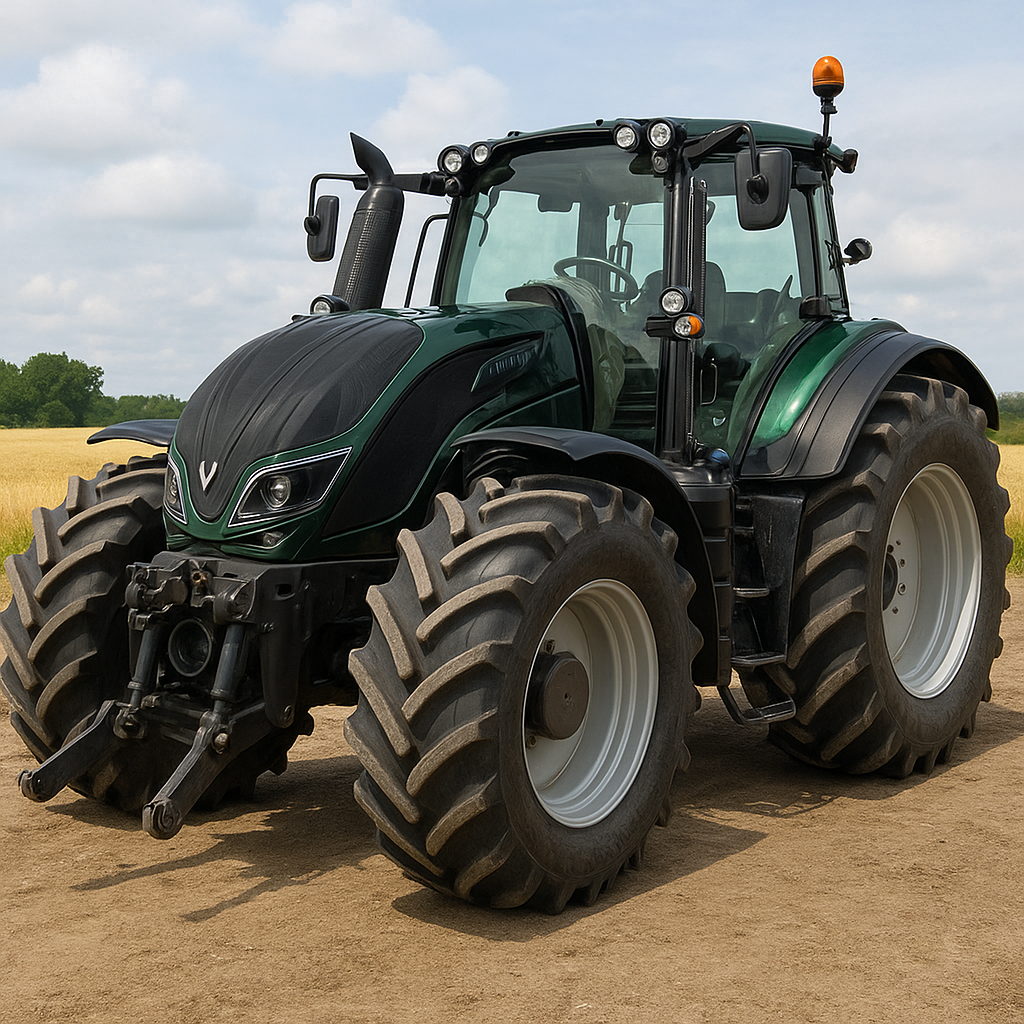
The Valtra T144 is a model that exemplifies the brand’s commitment to durable, flexible and farm-focused machinery. Designed to perform a wide range of agricultural tasks, this tractor is recognized for its balanced combination of power, operator comfort and adaptability to implements. The following article explores the T144’s design, typical applications, technical characteristics, maintenance considerations, and market role, offering practical insights for farmers, contractors and machinery enthusiasts.
Design and engineering philosophy
Valtra tractors are engineered with a clear emphasis on practical utility and robustness, traits that the Valtra T144 carries forward. The design philosophy centers on creating a workhorse capable of delivering dependable performance in diverse conditions, from arable fields to livestock operations and municipal work.
Chassis and build
The T144 typically features a strong, fully boxed chassis that provides stability when pulling heavy implements or carrying front loaders. The chassis design allows for a low center of gravity, which improves traction and safety on slopes and during road transport. Power take-off mounting points, three-point linkage and hydraulic ports are located for straightforward implement attachment and serviceability.
Engine and powertrain layout
Under the hood, Valtra prioritizes engines that offer a blend of torque, fuel economy and durability. While exact engine specifications can vary by year and market specification, the T144 is commonly associated with a medium-to-high power band suitable for medium-scale farming and contracting. The powertrain is designed to transmit power efficiently to the wheels and PTO while allowing a range of gearing options to match implement requirements.
Hydraulics and PTO
Hydraulic capacity is often generous for this class of tractor, providing enough flow to run modern implements such as hydraulic planters, slurry tankers or front loaders. The PTO (power take-off) is a central feature for operating mowers, balers and rotary tillers; the T144 typically supports standard PTO speeds with optional ground-speed PTO configurations for specialized tasks.
Applications and typical use cases
The tractor class represented by the T144 is prized for its versatility. A few of the most common applications include:
- Agricultural fieldwork: plowing, harrowing, seeding, fertilizer spreading and cultivating.
- Hay and forage operations: mowing, raking, teddering, baling and silage handling using PTO-driven implements.
- Loader duties: material handling, pallet work, manure stacking and feed delivery when equipped with a front loader.
- Transport and road work: towing wagons, slurry tankers and operating trailer-mounted equipment.
- Livestock and mixed farm logistics: bedding distribution, feed mixing and yard maintenance.
- Contracting and municipal roles: road verge cutting, snow clearing and ground maintenance with suitable attachments.
Because of its power level and configuration flexibility, the T144 is particularly well suited to medium-sized farms and contractors who need a single tractor to cover many tasks rather than a large fleet of specialized machines.
Technical specifications and performance (typical values)
Technical specifications for the T144 can vary by production year, regional model variants and optional equipment. The numbers below are presented as representative ranges or typical values for a tractor in this segment and should be checked against the specific model year or local datasheets for absolute accuracy.
- Engine power: approximately 130–150 horsepower (hp) at rated RPM. This power band gives a good balance between fieldwork capability and fuel efficiency.
- PTO power: usable PTO output is typically somewhat lower than engine gross power—often around 85–95% of rated engine power depending on drivetrain losses.
- Displacement and torque: engines in this class often have displacements in the roughly 4.5–6.0 litre range and produce strong mid-range torque for draft-intensive tasks.
- Transmission: multiple transmission options are common, such as synchronized gearboxes (12×12, 16×16), or more advanced powershift or continuously variable transmissions (CVT) in some configurations to provide smooth speed control and greater productivity.
- Hydraulic flow: hydraulic flow capacity typically ranges from mid to high flow settings to power front loaders and remote hydraulic cylinders—common values are in the tens of litres per minute range for the main pump, often supplemented by a separate steering pump.
- Weight: operating weight usually falls in the medium range for this size of tractor (roughly 4,500–6,500 kg) depending on ballast, front loader and other options.
- Fuel capacity: fuel tanks are often sized to allow a full day of typical fieldwork without refueling; capacities vary but commonly fall between 150–300 liters depending on configuration and market.
Performance-wise, the T144 aims to deliver solid fuel economy across a range of tasks, with careful torque management and gear ratios allowing efficient PTO operations and field speeds. When equipped with a CVT or high-step powershift, it can keep implements in their optimal operating range while minimizing fuel consumption.
Operator comfort, ergonomics and safety
Valtra historically focuses on operator-centric design, and the T144 is no exception. Comfortable operation directly translates to higher productivity and lower fatigue during long working days.
- Cab design: spacious cabins with good visibility, suspended seats and adjustable controls reduce operator strain. Large glazed areas and well-placed mirrors support safe maneuvering and hitching.
- Controls and interfaces: logically arranged levers, joystick options for loader operations, and intuitive hydraulic control make implement management straightforward.
- Climate and noise: effective heating, ventilation and optional air conditioning help maintain operator comfort; sound insulation reduces noise levels to manageable ranges for prolonged operation.
- Safety systems: rollover protective structures (ROPS), seat belts and well-designed lighting packages enhance safety during night work and transport.
These features make the T144 suitable for day-long use during peak seasons like planting and harvest, where comfort and visibility contribute to operational efficiency.
Maintenance, reliability and lifecycle costs
Reliability and low lifecycle costs are central to the value proposition of the T144. Valtra focuses on creating tractors that are easy to maintain in the field and that have robust components to reduce downtime.
Routine maintenance
- Accessible service points: oil filters, fuel filters and air filters are placed for quick service, reducing time spent on routine maintenance.
- Scheduled intervals: regular oil and filter changes, hydraulic fluid checks and cooling system inspections help avoid premature wear. Following manufacturer intervals is recommended to preserve warranty and long-term performance.
- Wear parts: brakes, clutches and linkage components are designed to be replaced as modular units where possible, making field repairs straightforward for technicians.
Reliability and downtime
Valtra tractors are often praised for durability and the ability to operate in harsh climates. Availability of spare parts and a dealer network are important contributors to uptime. Properly maintained T144s can deliver many years of productive service; labour and parts costs over the tractor’s life can be optimized by routine preventive maintenance.
Resale and total cost of ownership
Tractors like the T144 typically retain good resale value when maintained to service schedules and when records are documented. The total cost of ownership is affected by fuel consumption, service interval costs, parts replacement frequency and the initial purchase configuration (e.g., presence of front loader, premium transmissions or advanced hydraulics).
Variants, options and aftermarket accessories
One of the strengths of models like the T144 is the range of options and the rich aftermarket ecosystem. Farmers and contractors can choose factory options and dealer-fitted accessories to tailor the machine to specific tasks.
- Transmission options: from manual synchronized gearboxes to powershift or CVT-like systems to match user preference for simplicity versus productivity.
- Hydraulic packages: different flow rates, additional remotes and closed-center load-sensing systems for advanced implement control.
- Cab and comfort upgrades: air conditioning, suspension seats, radio kits and advanced lighting packages for night work.
- Front loaders and attachments: factory or third-party loaders with multiple bucket and grapple options.
- Precision farming add-ons: GPS-guidance-ready systems, ISOBUS-compatible implement controls and telematics packages for fleet monitoring and data-driven management.
These choices allow owners to configure a T144 to be a general-purpose farm tractor, a specialized mower/forage machine or a contractor’s multi-duty unit.
Environmental considerations and efficiency
Modern tractors are expected to meet emissions regulations and operate efficiently. While specific emission standards depend on the production year and market (Tier/Stage regulations), tractors in this class often include engine management systems and aftertreatment options designed to reduce particulates and NOx output.
- Fuel efficiency: efficient torque delivery and the ability to operate implements in their optimal power range reduce wasted fuel.
- Emissions control: many engines utilize electronic fuel injection and exhaust aftertreatment to comply with regional standards.
- Precision farming compatibility: GPS-guided operations, section control and variable-rate applications reduce overlap and input waste, indirectly lowering environmental footprint.
Market role and user profile
The Valtra T144 fits a market niche where multi-functionality and robustness matter most. Typical owners include:
- Medium-scale arable and mixed farmers who require a reliable, mid-power tractor for a variety of implements.
- Contractors who need a workhorse capable of swapping tasks from tillage to transport and loader duties.
- Livestock farmers who value dependable yard work capability and front-loader performance.
- Local municipalities and service providers who require a durable machine for seasonal tasks like snow removal or verge maintenance.
Its combination of reliability, serviceability and practical power output make it an attractive choice for operations focused on value and longevity rather than boutique features.
Buying considerations and final remarks
When considering a Valtra T144, prospective buyers should:
- Confirm exact model year specifications and available options—these affect power, hydraulics and emission controls.
- Inspect service history and check for documented maintenance work, especially on major items like injectors, turbochargers and transmission services.
- Evaluate the intended workload to match transmission and hydraulic packages to daily tasks and long-term needs.
- Consider precision farming features and telematics if data-driven management is part of the operation’s strategy.
In summary, the Valtra T144 represents a practical balance of power, adaptability and durability that suits a broad range of agricultural and light-contracting tasks. Its strengths lie in straightforward serviceability, operator comfort and the ability to accept a wide variety of implements and options. For those needing precise technical figures for a specific unit, consulting the manufacturer’s spec sheet or an authorized Valtra dealer is recommended to obtain validated data for model year and regional configuration.