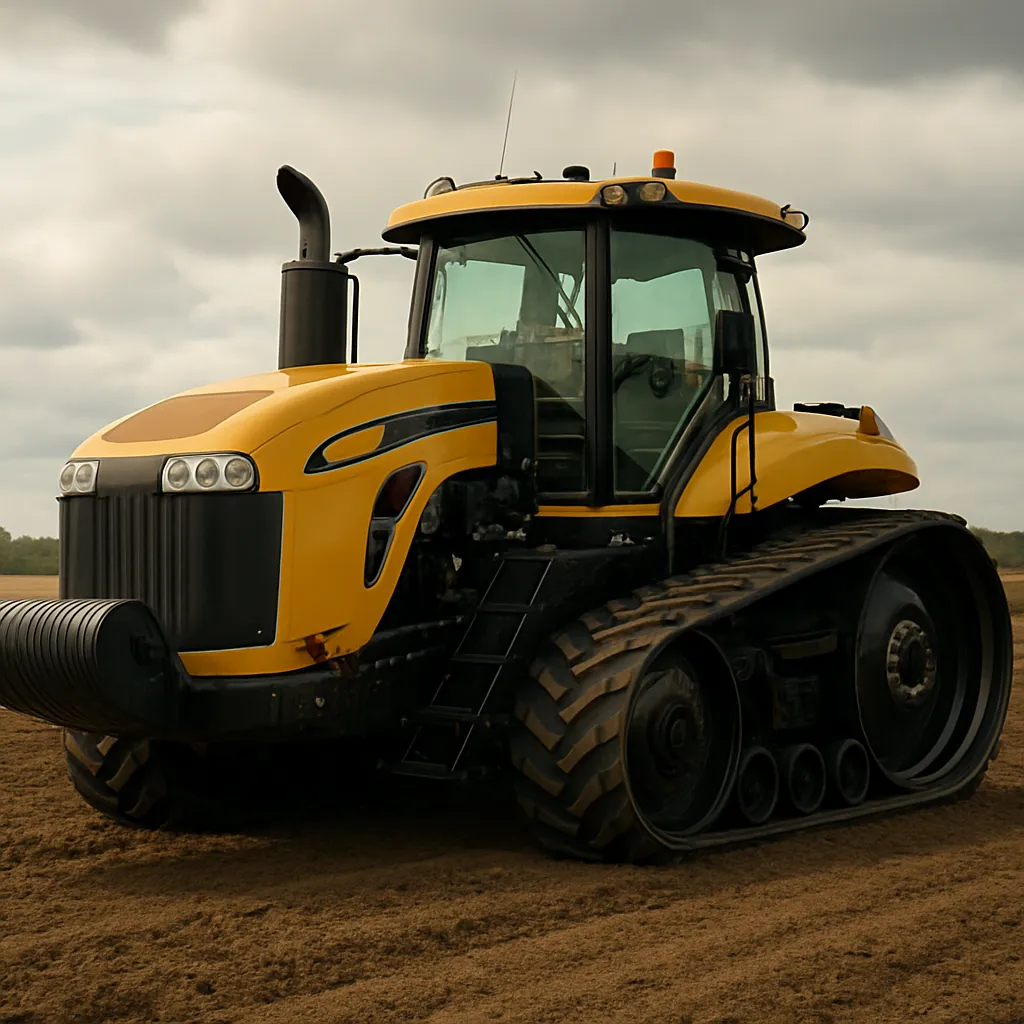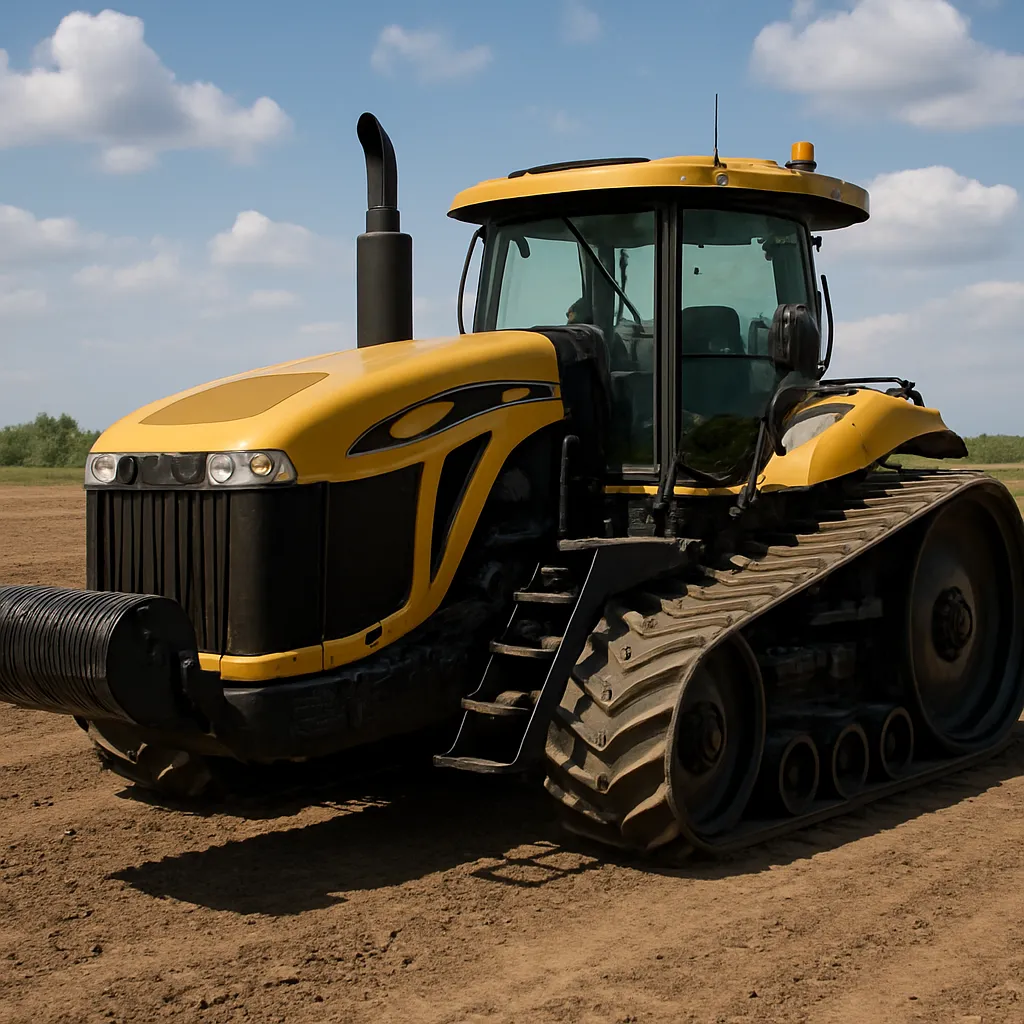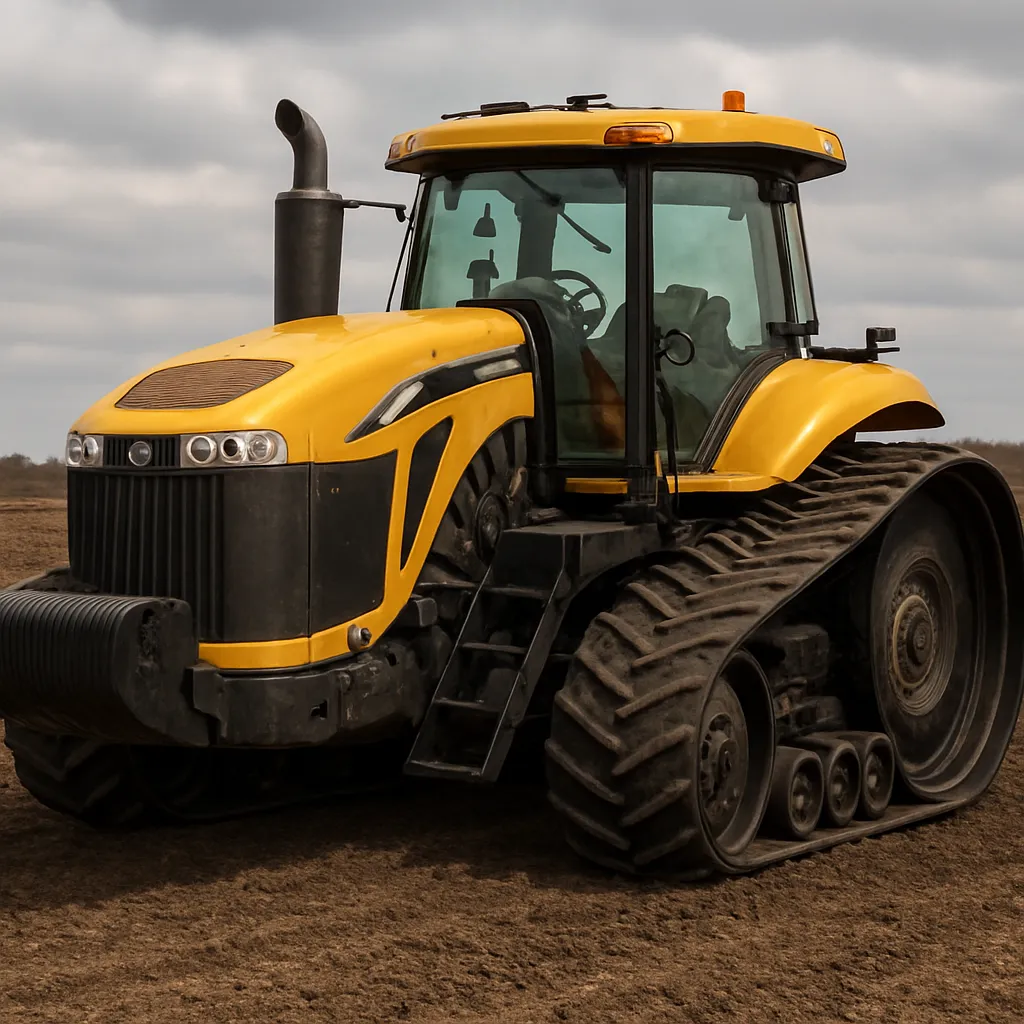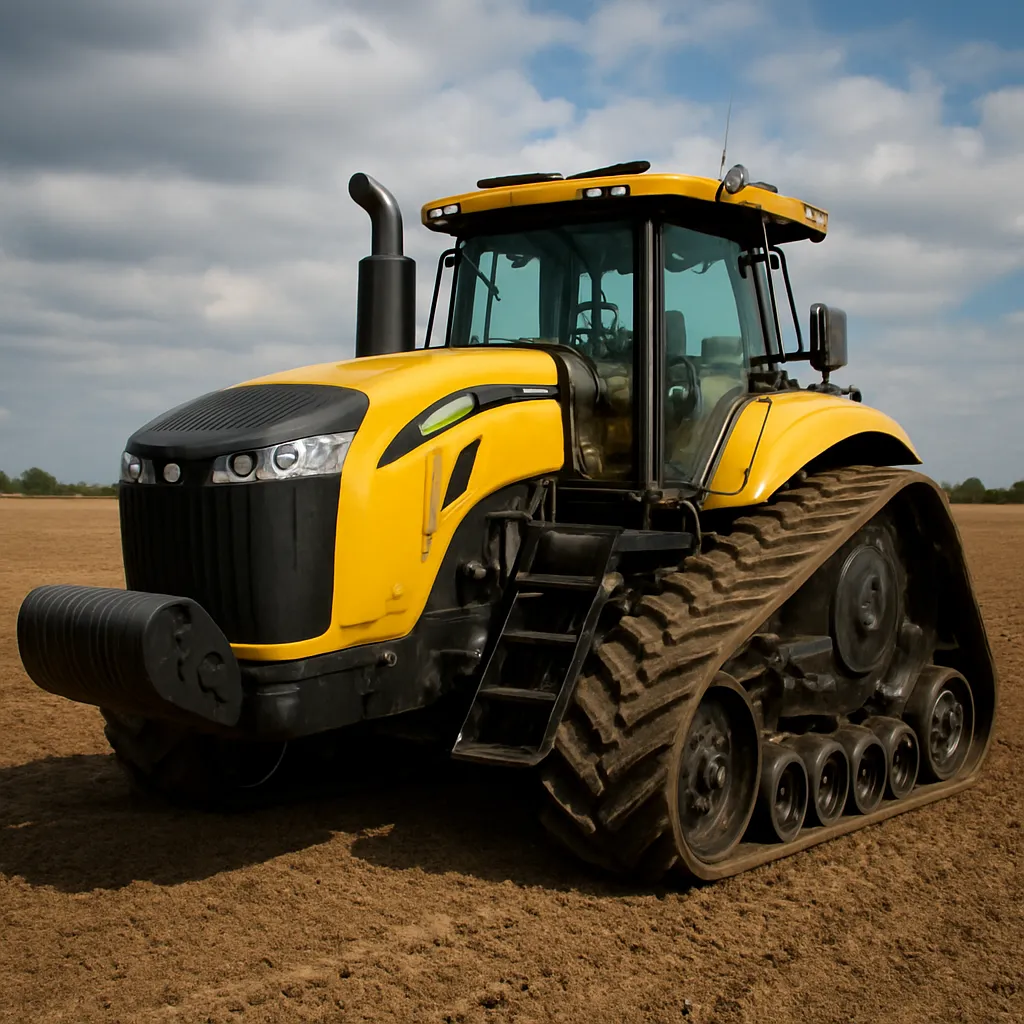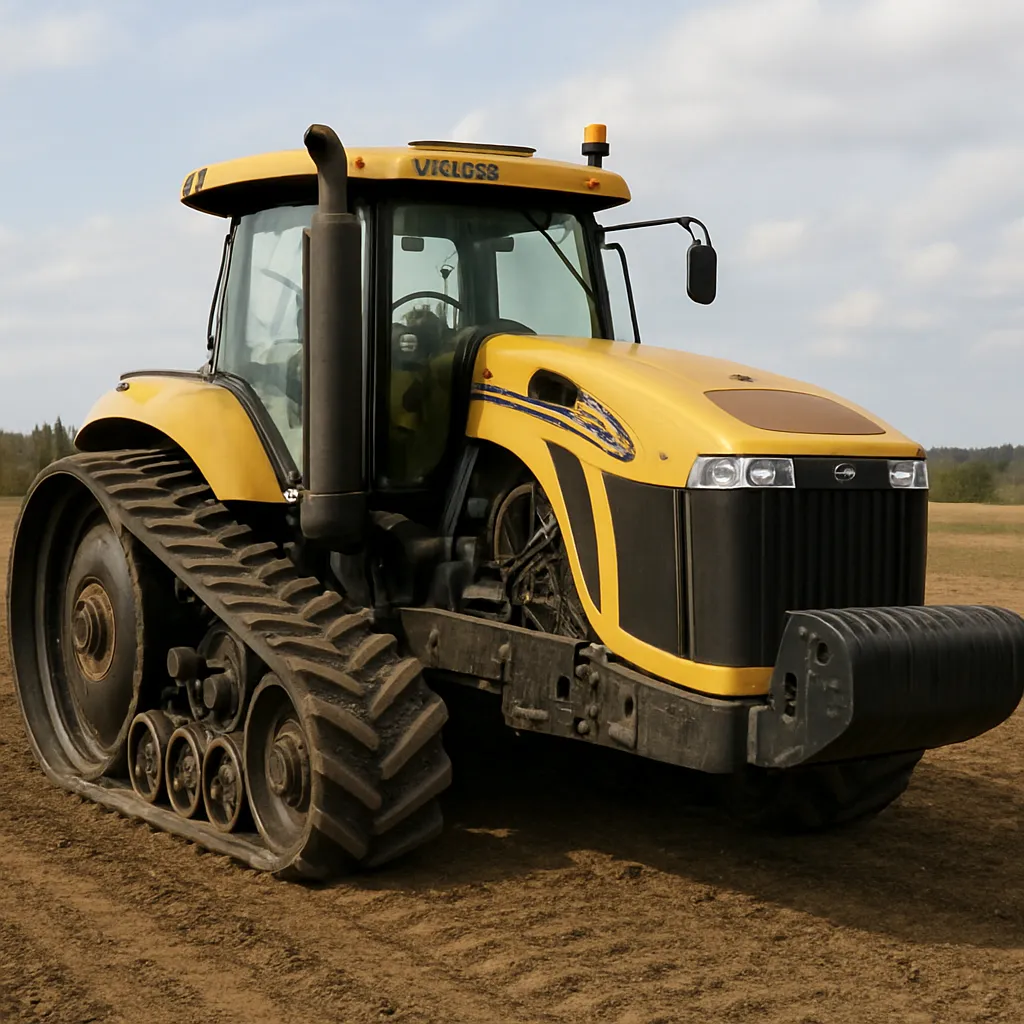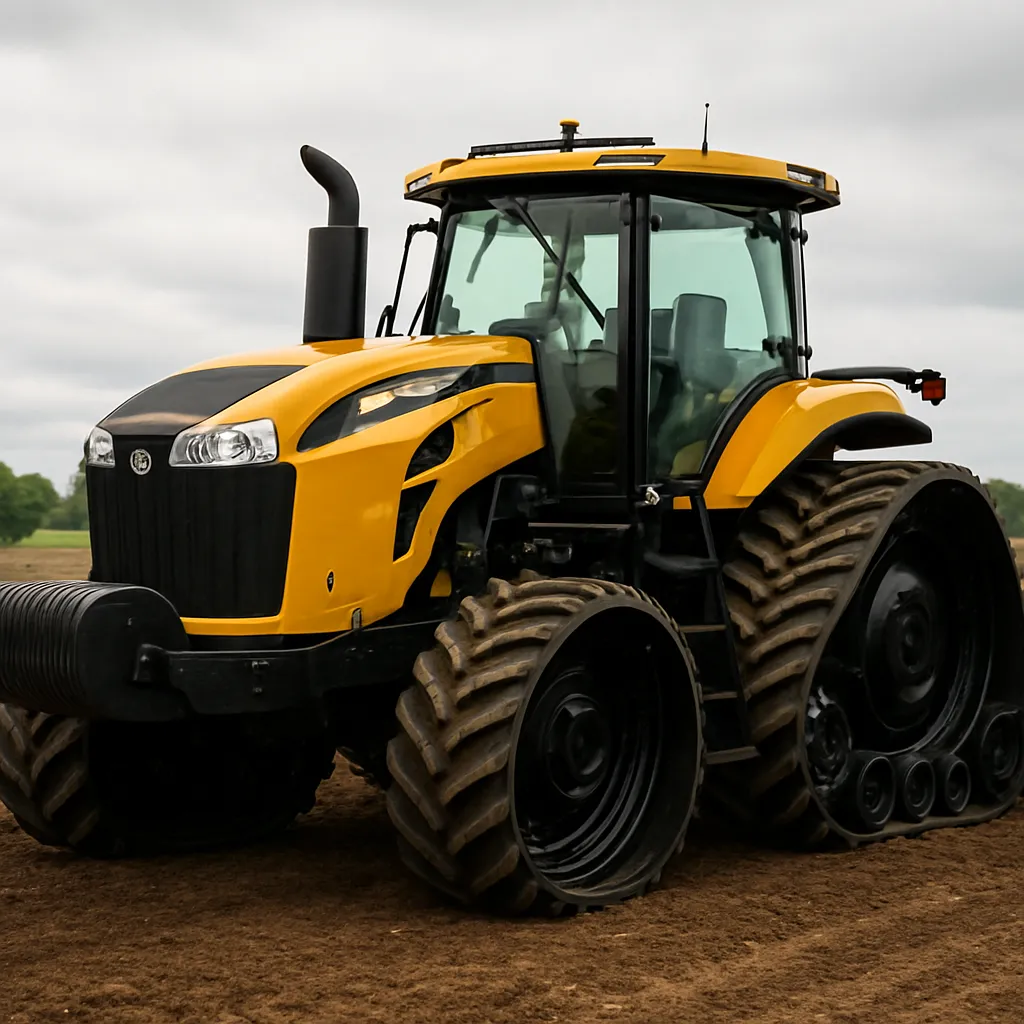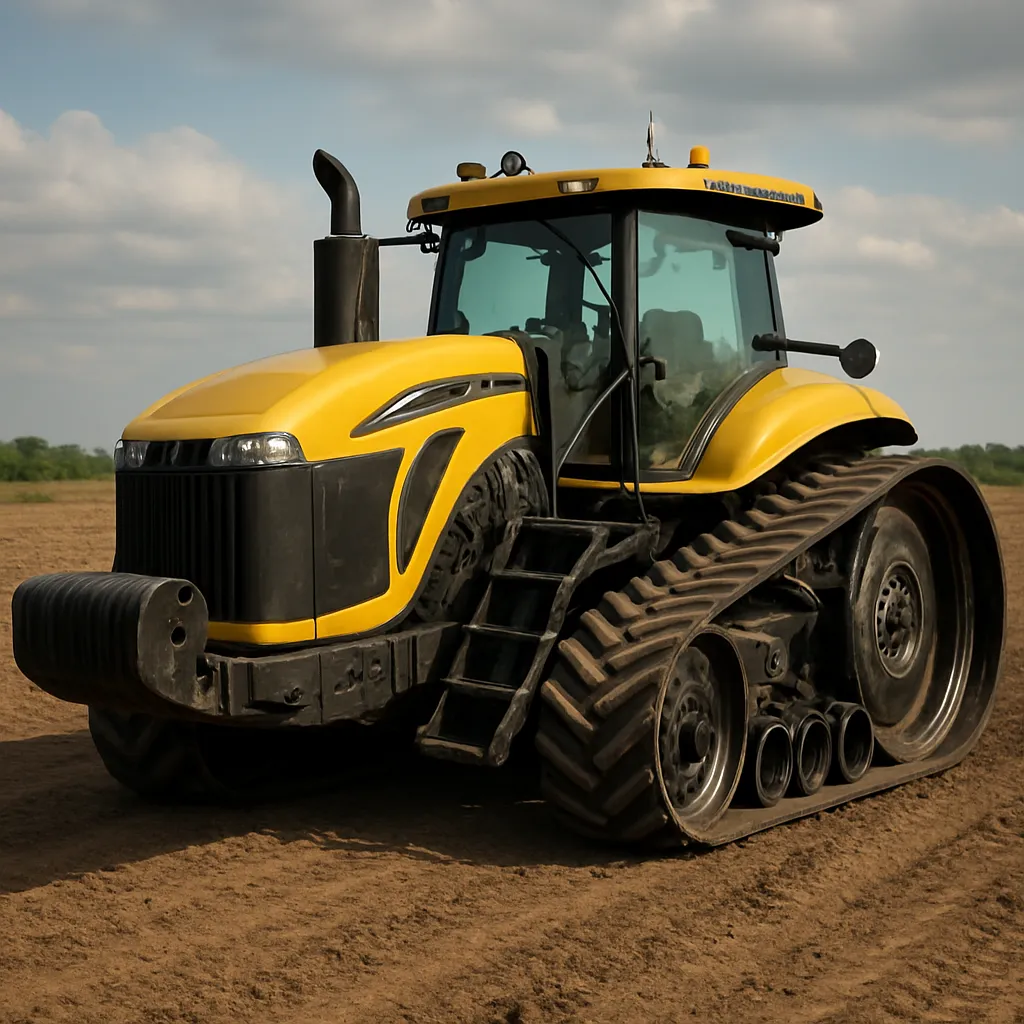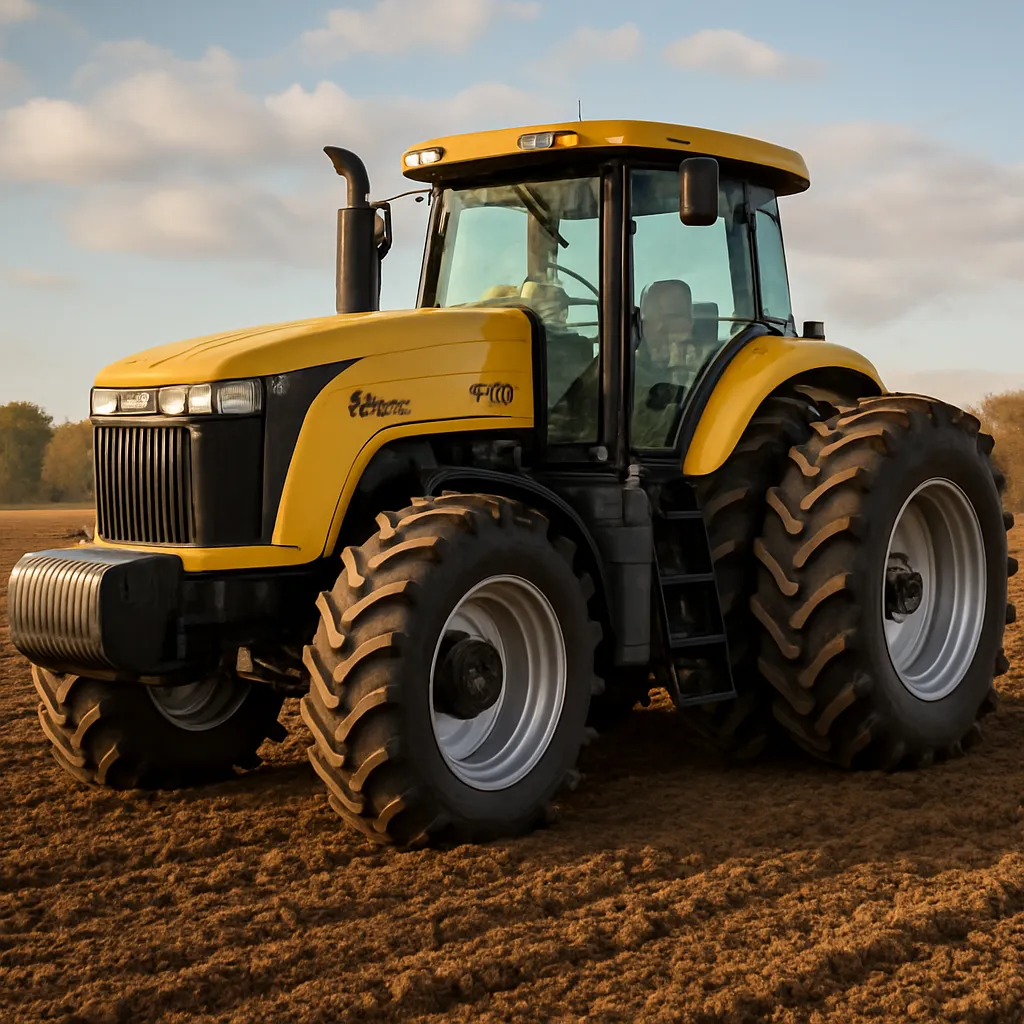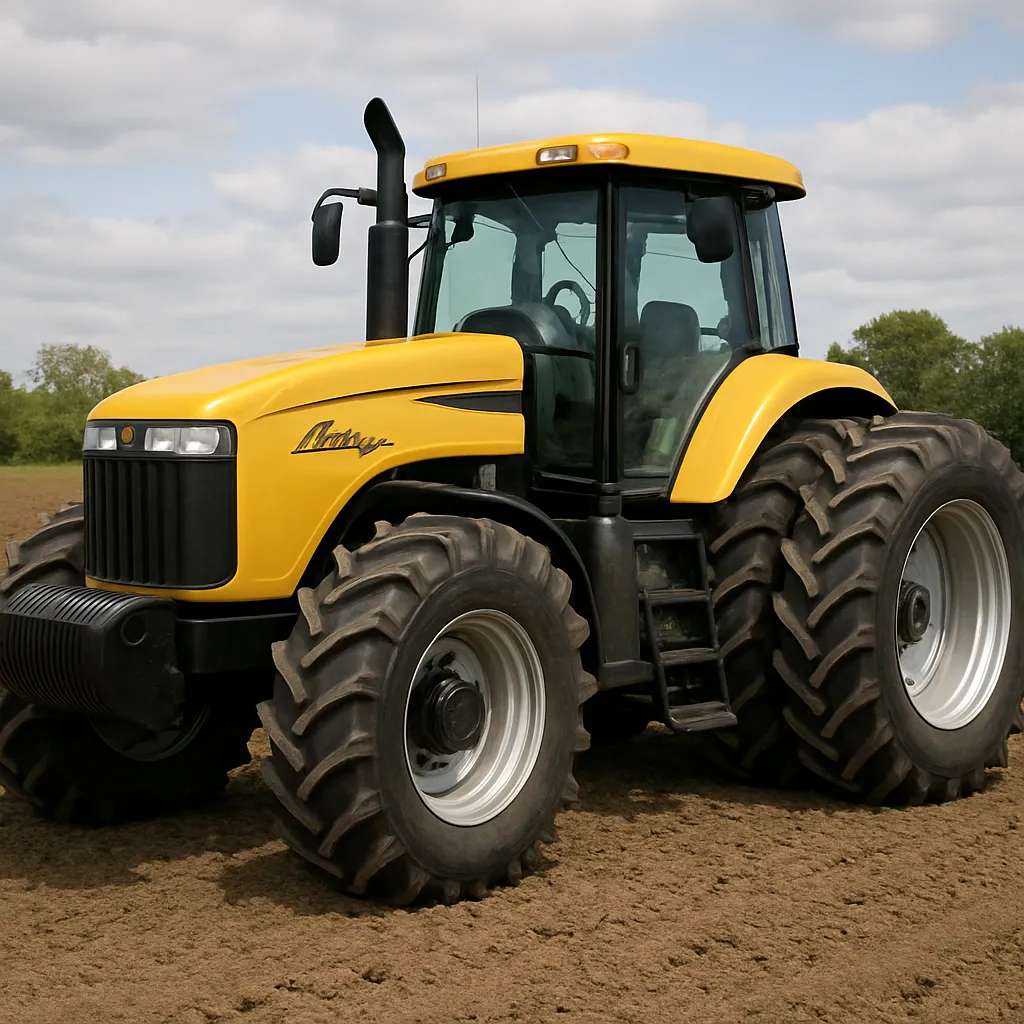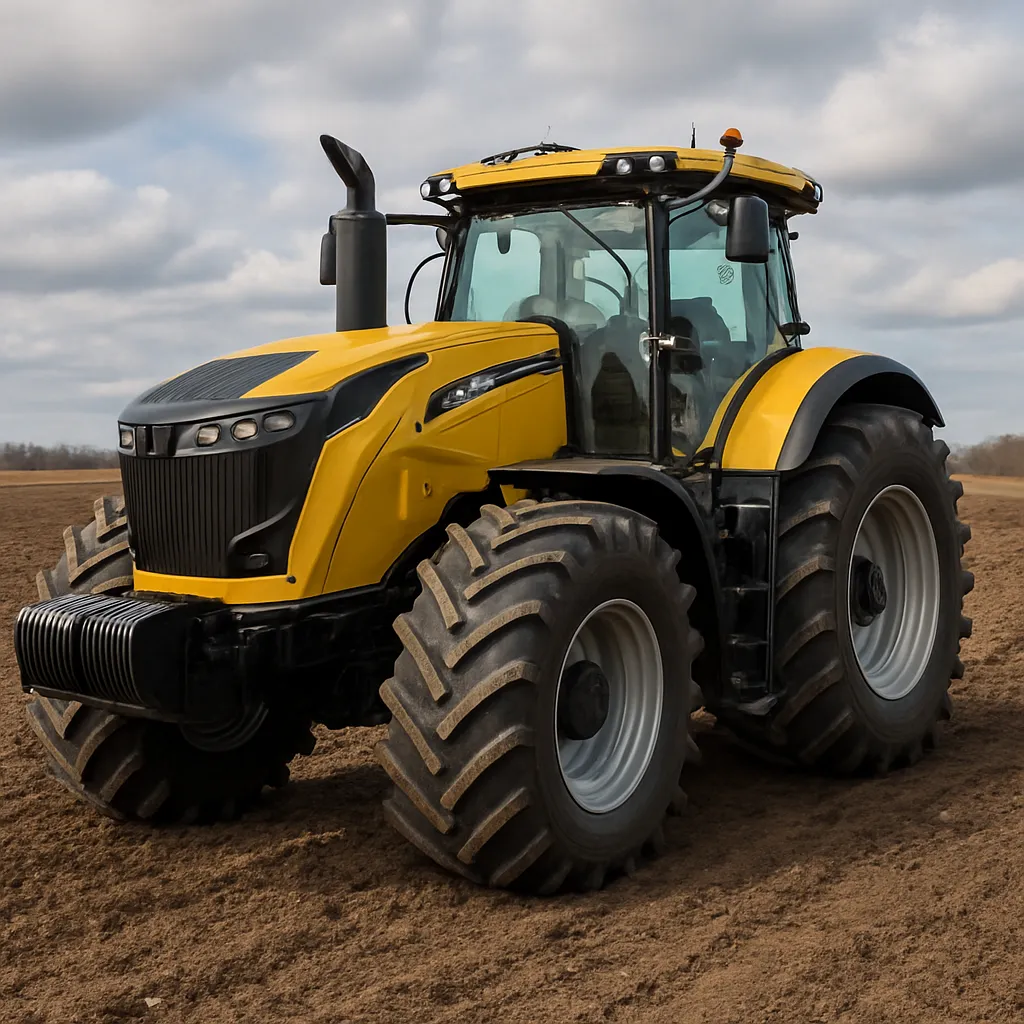
The Challenger MT945E is a high-horsepower, tracked agricultural machine designed for large-scale farming operations that require exceptional traction, flotation and pulling power. In this article we explore its design, typical applications, technical characteristics, operational economy and the practical advantages it brings to modern agriculture. The text highlights practical uses, maintenance considerations and the role such a machine plays in precision and conservation agriculture.
Design and Engineering Philosophy
The Challenger MT945E belongs to a family of track tractors engineered to combine raw power with superior ground contact. Unlike wheeled tractors, the MT945E uses a wide undercarriage with rubber tracks that distribute weight over a larger surface area, reducing soil compaction and improving traction on soft or uneven ground. Manufacturers of machines in this class prioritize sturdy frames, robust drivetrains and serviceable components to meet the demands of continuous heavy-duty fieldwork.
Key structural features
- Heavy-duty chassis and reinforced three-point hitch mounts to handle large implements.
- Wide rubber tracks and adjustable undercarriage for different soil and crop conditions.
- Spacious operator cab designed for long working days with climate control, ergonomic controls and good visibility.
- Integrated hydraulic systems and PTO options to drive a wide range of implements.
The design emphasis is on reliability and maintenance accessibility: service points are organized to reduce downtime, and many parts are modular to allow quicker replacement in the field or workshop.
Powertrain, Performance and Technical Characteristics
The MT945E is a representative of the high-power segment of agricultural tractors, intended to handle implements that require sustained torque and steady drawbar power. Its powertrain is engineered for long hours at moderate to high loads, with cooling, filtration and fuel systems sized accordingly.
Performance profile
- Engine class: large-capacity turbocharged diesel, designed for heavy-duty agricultural duty cycles.
- Rated power: typically in the mid-400s horsepower range (different configurations and market trims may vary).
- Drawbar and PTO capability: built to transmit substantial torque to large ploughs, seed drills and tillage equipment.
- Transmission and drive: powershift or continuously variable-type experiences are commonly paired with tracked drivetrains for smooth torque delivery.
Exact numerical specifications vary with model year and optional packages. In general, tractors like the MT945E prioritize sustained torque and cooling capacity over short-duration peak horsepower. This makes them suitable for long, demanding operations such as deep ripping, primary tillage and heavy seeding in large fields.
Tracks, Traction and Soil Interaction
One of the most defining features of the MT945E is its tracked undercarriage. Tracks change how a tractor interacts with the soil and have tangible production advantages under many circumstances.
Main benefits of tracks
- Increased traction: tracks provide more continuous ground contact than tires, reducing wheel slip and improving fuel conversion to tractive effort.
- Lower soil compaction: the larger footprint spreads weight over a greater area, preserving soil structure and promoting root development and drainage.
- Smoother ride over ruts and uneven fields: this improves operator comfort and allows implement settings to remain more consistent at speed.
- Better flotation in wet conditions: operators can work earlier in the season or in marginally wet fields where wheeled tractors might be limited.
Tracks are not without trade-offs: higher initial purchase cost, potential for increased track maintenance depending on terrain and slightly different transport characteristics on roads. However, for many large-scale operations, the field productivity gains and soil health benefits outweigh these costs over the machine’s life.
Primary Applications and Field Use
The MT945E is optimized for large-acreage producers and contractors who operate heavy soil-engaging implements. Typical roles include:
- Tillage: primary and secondary tillage where consistent pull and depth control are necessary (e.g., chisel ploughs, cultivators).
- Seeding and planting: pulling large air seeders and planters across broad swaths of land, especially where minimizing compaction maintains seedbed quality.
- Deep ripping and subsoiling: requiring sustained power and traction to break hard pans and improve subsoil drainage.
- Large-scale fertiliser and manure application: where heavy mounted or trailed equipment must be moved efficiently over fields.
- Transport and implement movement: moving large mounted implements between fields or towing heavier trailers across soft ground.
Contractors benefit particularly from the MT945E’s combination of power and track flotation, offering faster field completion times and reduced pass counts, which is an economic advantage when charging by hectare or job.
Precision Agriculture and Modern Controls
Modern versions and properly equipped MT945E tractors integrate with precision ag systems to optimize efficiency and reduce inputs. These systems include autoguidance, variable-rate application and telematics.
Technology commonly integrated
- Autosteer and GNSS-based guidance for accurate headland turns and reduced overlap.
- Telematics and remote diagnostics that report operating hours, fuel consumption, location and fault codes to fleet managers.
- Compatibility with variable-rate controllers and implement ISOBUS systems to optimize seeding and fertilisation in real time.
Such technologies reduce operator fatigue, increase field efficiency and improve input use efficiency — contributing to better yields and lower per-hectare costs. The MT945E platform lends itself well to these systems because of its stable platform and hydraulic capacity to power modern implements.
Operator Environment and Ergonomics
Large tracked tractors like the MT945E are designed for long shifts. Cab design tends to emphasize visibility, noise reduction, suspension seating and intuitive controls.
- Comfort features: climate control, air-suspension seat, low-noise insulation and ample storage.
- Controls: ergonomic joystick and console layouts with programmable shortcuts for repeated tasks.
- Visibility: high-mounted cab position and wide glass areas, often augmented by cameras for rear implement monitoring.
A comfortable, well-instrumented cab improves productivity by allowing the operator to maintain consistent implement performance and make informed adjustments while working long hours.
Serviceability, Maintenance and Reliability
Maintenance considerations are vital for heavy-use tractors. Typical areas of focus for reliability and lifecycle costs include filtration systems, cooling, track maintenance and hydraulic service intervals.
Practical maintenance topics
- Scheduled oil and filter changes for engine and hydraulic systems to preserve component life.
- Undercarriage inspections: track tension, idler condition and rubber pad wear must be monitored to avoid costly downtime.
- Cooling system checks: high-duty cycles generate substantial heat, so radiator and intercooler cleanliness is essential.
- Electronics and software updates: telematics and guidance systems may require periodic updates to maintain compatibility and performance.
Operators who adhere to manufacturer-recommended service intervals usually find that total cost of ownership is competitive relative to wheeled counterparts when productivity advantages are considered. The MT945E’s design encourages straightforward access to service points and modular components to simplify repairs.
Operating Costs and Economic Considerations
When assessing the economic case for a larger tracked tractor such as the MT945E, producers typically evaluate acquisition cost, fuel use, productivity (hectares per hour), maintenance and resale value.
- Fuel efficiency: tracked tractors can deliver more fieldwork per litre of fuel in high-traction tasks because less energy is lost to wheel slip, though absolute fuel consumption is high due to horsepower class.
- Productivity: fewer passes and greater effective working width per hour often reduce labor and machinery hours per hectare.
- Resale and lifecycle: heavy-duty tracked tractors often retain value among contractors and large farmers needing proven high-power capability.
For many large operators, the improved field efficiency, reduced compaction and ability to operate in marginal field conditions provide a return on investment that makes the MT945E-type tractor an economically rational choice.
Environmental and Agronomic Impacts
Using a tracked tractor influences agronomic outcomes and environmental footprint. Reduced soil compaction improves water infiltration and root growth, which can increase effective yield potential in many cropping systems.
- Soil health: fewer passes and lower ground pressure preserve soil aggregates and biological activity.
- Fuel and emissions: while absolute fuel consumption tends to be high for high-horsepower machines, improved field efficiency and fewer passes can lower fuel use per hectare.
- Conservation tillage compatibility: tracks help operations that adopt reduced tillage by minimizing the soil compaction associated with large implements.
When integrated into a broader conservation agriculture strategy, a machine like the MT945E can be a tool for improving long-term sustainability of cropping systems.
Real-World Use Cases and User Profiles
Typical users of an MT945E-style machine include large arable farms, custom contractors and regional operations managing hundreds to thousands of hectares. Specific scenarios:
- Large-scale cereal farms in temperate regions using wide seeders and cultivators where early spring or wet conditions demand high flotation.
- Contractors performing land preparation, deep ripping and large-scale drilling for multiple farms across a region.
- Operations transitioning to precision agriculture that require a reliable platform for GNSS-guided seeding and application tasks.
Feedback from operators in similar tractor classes often highlights increased daily coverage rates, reduced soil compaction and improved timing flexibility as the main advantages.
Comparison with Wheeled Tractors and Other Track Models
Choosing between tracked and wheeled tractors depends on field conditions, crop rotation, transport needs and capital constraints. Compared with comparable-power wheeled tractors, the MT945E-style tracked machine typically offers:
- Better traction and reduced slip under load, translating to improved fuel-to-ground work efficiency.
- Lower ground pressure but potentially higher maintenance for track systems in abrasive or rock-strewn soils.
- Different transport limitations: road speed and transport considerations may require additional planning when moving between distant fields.
Within tracked offerings, buyers weigh undercarriage design, track width options and aftercare networks. Choosing the right configuration often comes down to operator preference and local dealer support for parts and service.
Practical Tips for Prospective Buyers
- Assess typical field conditions: if you frequently operate on soft or wet fields, a tracked machine can increase operational windows and reduce risk of stuck equipment.
- Calculate cost per hectare: include acquisition, fuel, maintenance and expected productivity gains relative to current equipment.
- Check dealer support: availability of spare parts, qualified technicians and software updates is crucial for minimizing downtime.
- Consider implement compatibility: ensure your primary implements are matched to the tractor’s hydraulic and hitch capacities.
- Plan for transport: large tracked tractors can have specific transport regulations and may require trailers or escorts for public road travel.
Summary and Final Observations
The Challenger MT945E-style tractor serves large-scale farmers and contractors who need high sustained horsepower, excellent traction and reduced field compaction. Its tracked design provides clear agronomic and operational advantages in many contexts, especially where early-season access, heavy tillage or large seeding operations are important. While acquisition and maintenance of tracked machines carry specific considerations, the gains in productivity, improved soil outcomes and compatibility with precision farming systems make it a compelling choice for operators focused on efficiency and long-term soil health.
Key strengths include field productivity, reliability when properly maintained, and adaptability to large-implement agriculture. Important considerations before purchase are total lifecycle costs, undercarriage service needs and local service network strength. When chosen and configured correctly, a machine like the MT945E can be a cornerstone asset for modern, large-scale agricultural enterprises that emphasize both performance and conservation-minded soil management.