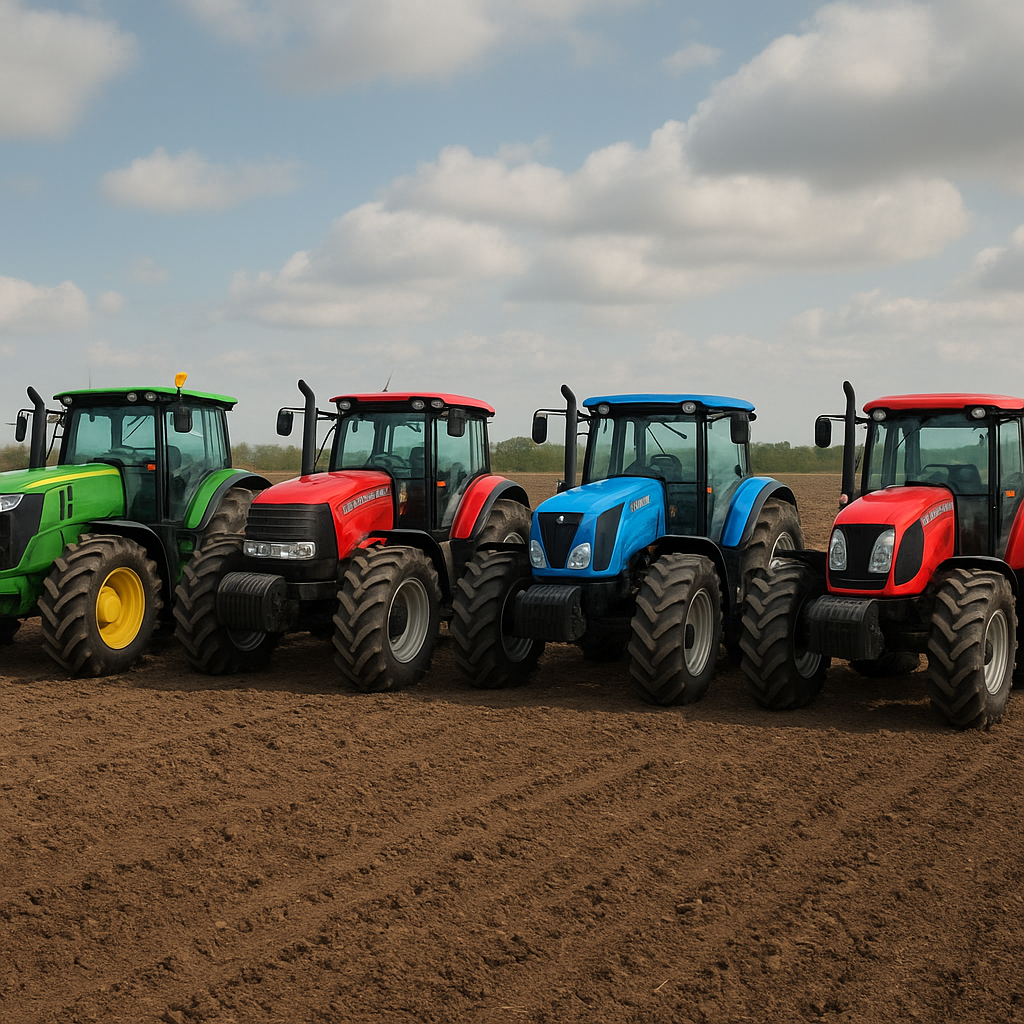
The vast landscapes of Eastern Europe host some of the most demanding farmlands in the world, requiring tractors engineered to meet rigorous standards of power and endurance. From the rolling plains of Ukraine to the fertile fields of Poland and the rugged terrains of Belarus, farmers rely on robust machines to sustain both small family operations and large agribusinesses. This article explores the leading tractor brands, the cutting-edge technologies they employ, and the evolving market forces shaping the future of farming equipment in the region.
Main Tractor Manufacturers of Eastern Europe
MTZ (Minsk Tractor Works, Belarus)
Founded in 1946, MTZ has grown into a symbol of reliability and affordability across more than 60 countries. The iconic Belarus series is renowned for its simple design, ease of maintenance, and strong torque delivery. MTZ tractors often feature air-cooled turbocharged engines, dry disc brakes, and mechanical transmissions that farmers can service without specialized tools.
- MTZ-80: A classic model still in high demand for its rugged chassis and modular attachments.
- MTZ-1523: Delivers up to 152 horsepower, ideal for heavy tillage and transport tasks.
- MTZ-1221: Combines a spacious cabin with electronic fuel injection, meeting Stage III emissions standards.
Ursus (Poland)
With roots dating back to 1893, Ursus ranks among the oldest tractor producers in Europe. Recent partnerships with global OEMs have injected fresh capital and advanced innovation into Ursus’s lineup. Their flagship models offer hydrostatic steering, ergonomic control layouts, and compatibility with precision guidance systems.
- Ursus C-380: A light-duty tractor appreciated for orchard and vineyard work.
- Ursus 5714: A mid-range workhorse boasting up to 150 hp and 12×12 synchronized gearbox.
- Ursus 6140: Equipped with front loaders and four-wheel drive, addressing multifaceted farm chores.
Zetor (Czech Republic)
Emerging from Brno in 1946, Zetor has made a name for developing engines in-house and maintaining a direct piston-pump injection system for heightened efficiency. Their CE-certified cabins, wide powerband, and minimalistic electronics ensure low downtime, even in remote areas lacking advanced workshop facilities.
- Zetor Proxima CL: Ranging from 100–120 hp, fitted with a 24×24 Powershift transmission.
- Zetor Forterra HSX: Offering 140–160 hp, hydrostatic header lifter, and eight shuttle gears.
- Zetor Crystal HD: High-capacity cooling and adjustable steering column for operator comfort.
Rostselmash (Russia) and Other Players
While primarily known for combine harvesters, Rostselmash has recently expanded into high-power tractors under the “RostAgro” banner. These machines emphasize heavy-duty final drives, reinforced three-point hitches, and air-suspended seats for extended field work. Smaller brands in Bulgaria, Romania, and Ukraine are carving niches by offering engineering customizations, from low-profile vineyard tractors to articulated machines for forestry.
Innovation and Technology in Large-Scale Farming
As agricultural enterprises scale up, technology becomes a vital differentiator. Precision farming tools and smart implements help Eastern European producers compete on price and quality in global commodity markets.
GPS Guidance and Auto-Steer
Tractors now integrate from-the-factory modules or dealer-fitted kits that offer centimeter-level accuracy. Auto-steer systems reduce operator fatigue and overlap, saving fuel and inputs by up to 15% per season.
Telematics and Fleet Management
Producers can track fuel consumption, engine temperature, and idling time via cellular or satellite networks. Alerts for service intervals and diagnostics help avoid unscheduled downtime. Smaller cooperatives share tractors through cloud-based booking platforms, optimizing equipment utilization.
Variable Rate Technology (VRT)
Using on-the-go sensors and prescription maps, modern seed drills and sprayers adjust flow rates based on soil type and moisture content. This level of control is critical for maximizing yield in regions with unpredictable rainfall patterns.
Market Trends and Regional Impact
Eastern Europe’s entry into the EU and WTO has reshaped agricultural machinery markets. Subsidy schemes, tariff adjustments, and national incentive programs all influence brand popularity and sales volumes.
Subsidies and Financial Incentives
Many governments provide rebates covering 30–50% of purchase costs for equipment meeting emission and safety standards. This encourages producers to retire outdated models in favor of powerful, low-emission tractors with onboard diagnostics.
Local vs. Imported Machinery
While homegrown brands like MTZ and Ursus dominate rural areas with limited service networks, imported machines from Western Europe and the US gain traction among large-scale farms seeking cutting-edge hydraulics and cabin amenities. Dealers are expanding parts warehouses and technical training programs to bridge the gap.
Aftermarket Services and Parts Supply
A strong aftermarket can tip buying decisions. Companies offering exchange programs for major components, online parts catalogs, and mobile service trucks have become integral to brand loyalty. Robust local networks ensure that downtime remains minimal during peak seasons.
Future Outlook and Sustainability
The shift towards sustainability is reshaping design priorities. Tractor manufacturers are exploring alternative drivetrains, lightweight composites, and emission-neutral fuels to meet tightening regulations and environmental targets.
Electric and Hybrid Powertrains
Several Eastern European startups, in collaboration with technical universities, are testing battery-electric tractors for orchard and greenhouse operations. Hybrid diesel-electric prototypes aim to reduce fuel consumption by up to 40% during idling and low-load tasks.
Biofuel Compatibility
Projects are underway to certify engines for HVO (Hydrotreated Vegetable Oil) and B100 biodiesel blends. Such fuels can cut lifecycle carbon emissions by nearly 90% compared to conventional diesel, while requiring minimal engine modifications.
Lightweight Materials and Modular Design
Use of high-strength steel alloys and polymer panels reduces overall weight, improving fuel economy and decreasing soil compaction. Modular hitches and quick-change attachments enable one base machine to serve multiple roles, from plowing to harvesting, extending the service life of each unit.
Eastern Europe’s tractor landscape is marked by a balance between time-tested brands and innovative newcomers. Farmers will continue demanding machines that deliver high performance, low operating costs, and seamless integration with digital farming ecosystems. As technology evolves and sustainability goals tighten, the region’s tractor manufacturers are poised to play a vital role in feeding a growing world population with resilient, future-ready equipment.