Transporting some of the world’s largest agricultural machines demands a blend of meticulous planning, robust equipment, and in-depth know-how. From the moment a multi-ton tractor leaves the factory floor until it reaches its destination, every step must be carefully coordinated. This article explores best practices for moving massive tractors over land and sea, ensuring efficiency, compliance, and safety at every stage.
Selecting the Right Tractor for Transport
Assessing Dimensions and Weight
Before any movement begins, it’s crucial to gather accurate specs for the tractor in question. Oversized models can reach widths of 5 meters and heights exceeding 4 meters. Weight can easily surpass 20 metric tons. Key parameters include:
- Overall length, width, and height
- Gross vehicle weight rating (GVWR)
- Axle load distribution
- Center of gravity location
These figures are vital to secure the correct trailer type, obtain necessary permits, and calculate route feasibility. Underestimating any dimension can lead to roadblocks, fines, or even accidents.
Special Features to Consider
Modern tractors come with advanced options that may complicate transport:
- Folding or extendable booms
- Retractable mirrors and steps
- Hydraulic outriggers and stabilizers
- Integrated GPS and telematics units
It’s advisable to fold or retract all protruding parts to minimize exposure and prevent damage. Removing accessories like front weights, three-point hitches, or GPS masts can reduce height and width, easing the transport process.
Road Transport Best Practices
Route Planning and Permits
Detailed route planning often makes the difference between a smooth journey and major delays. When dealing with oversized loads, factors such as bridge clearances, narrow lanes, low-hanging cables, and tight corners must be assessed. Steps to take:
- Coordinate with local transport authorities for special permits
- Identify weight-restricted bridges and slippery road segments
- Plan for daylight travel to maximize visibility
- Engage pilot cars or escort vehicles where mandated
Permits differ by region. Some jurisdictions require time-of-day restrictions, while others insist on police escorts. Allocating extra days in the schedule for compliance checks can prevent costly hold-ups.
Securing the Load
Ensuring the tractor remains immobile on the trailer is a top priority. Improper securement can lead to shifts that jeopardize driver safety and roadside infrastructure. Best practices include:
- Using certified heavy-duty lashing straps and chains
- Applying edge protectors to avoid strap abrasion
- Distributing tie-down points across axles and chassis
- Double-checking tension after initial road segments
Employing a professional load inspector can add an extra layer of oversight. Frequent on-the-go checks at rest stops help detect loosening before it becomes a hazard.
Specialized Trailers and Equipment
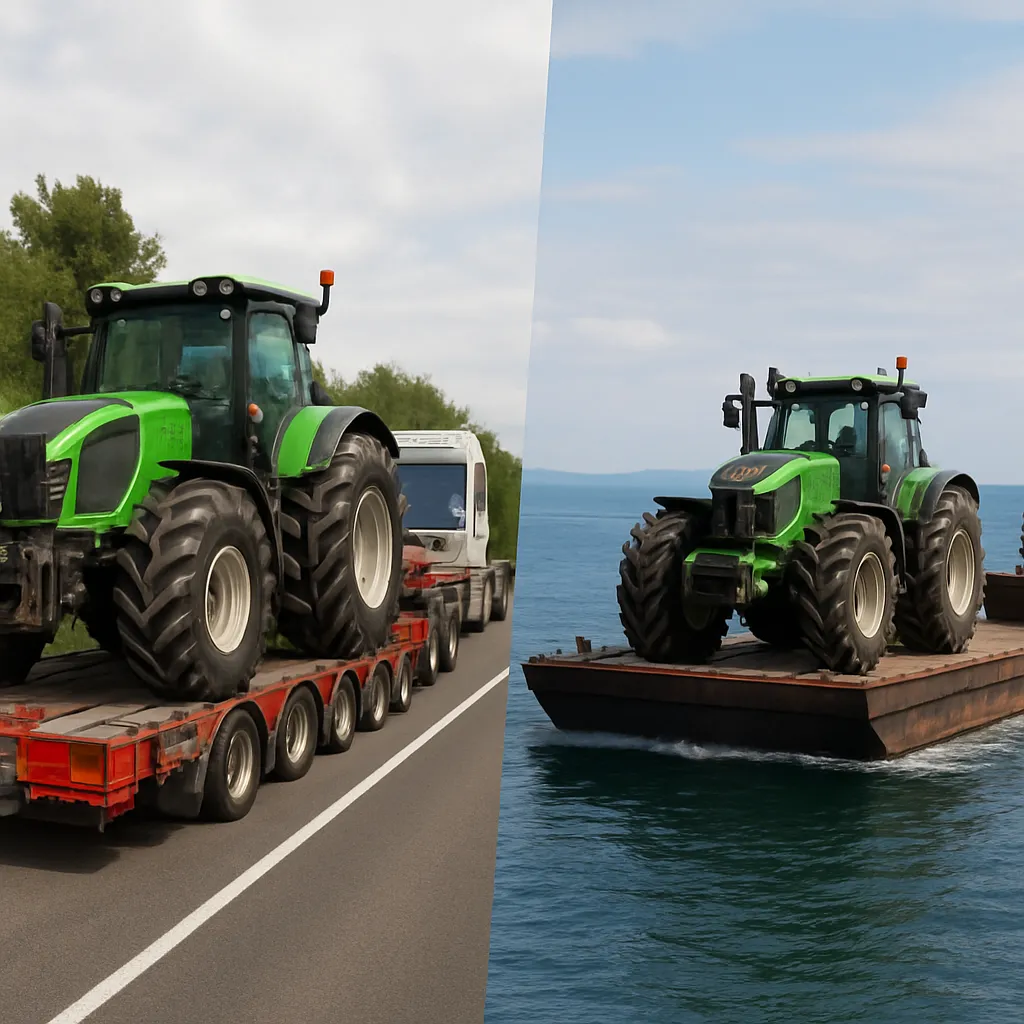
For tractors tipping the scales at 25 tons or more, standard flatbeds are often insufficient. Common trailer types include:
- Lowboy trailers with drop decks to minimize deck height
- Multi-axle hydraulic modular trailers for ultra-heavy loads
- Extendable trailers that adjust to tractor length
Pairing the trailer with a high-horsepower prime mover ensures adequate pulling power. In regions with steep gradients, auxiliary braking systems may be required to maintain control on descents.
Sea Freight Logistics
Preparing for Sea Voyage
When shipping tractors overseas, operators must decide between RORO (Roll-on/Roll-off) vessels, flat racks, or container ships:
- RORO allows tractors to be driven on board under their own power
- Flat racks secure tractors to open decks, ideal for extreme dimensions
- Containers can accommodate smaller tractors but often necessitate partial disassembly
Regardless of method, all metal surfaces should receive a protective coating to combat corrosion from sea spray. Electrical components must be sealed or removed to prevent water ingress, and critical assemblies labeled clearly for reassembly.
Port Operations and Handling
Efficient coordination with the port’s logistics team is essential. Key considerations include:
- Scheduling crane lifts during calm sea conditions
- Verifying quay strength for heavy lifts
- Ensuring ground guides are in place for precise positioning
- Conducting a pre-shipment inspection to document tractor condition
Specialist shipping companies often provide a breakdown of lashing points aligned with the tractor’s frame. This reduces the risk of structural damage while at sea.
Unloading and Final Delivery
Upon reaching the destination port, the tractor must transition seamlessly from ship to land transport. Steps include:
- Customs clearance with complete documentation
- Reverse-crane or RORO offloading depending on initial loading
- Reinstallation of removed parts, such as mirrors and weights
- Final road haul to farm or dealership using an appropriate trailer
Local road conditions, such as unpaved farm tracks or narrow access lanes, may necessitate a secondary, smaller transporter. Planning this leg in advance ensures the tractor arrives ready for immediate deployment.
Risk Management and Insurance
Given the high value of modern tractors—often exceeding $500,000—comprehensive insurance is non-negotiable. Coverage should include:
- In-transit damage by road or sea
- Theft or vandalism at staging areas
- Weather-related delays or loss
Working with an insurance provider that specializes in heavy equipment transport will help customize a policy that addresses every potential risk.